


Europe’s Most Stressful Countries for Beginner Drivers
Learning to drive is already one of the most nerve-wracking milestones a person can face. But what happens when you pass your test and immediately find yourself navigating congested motorways, crumbling road surfaces, and some of the most dangerous roads in Europe? For beginner drivers across the continent, the country you call home can make all the difference.
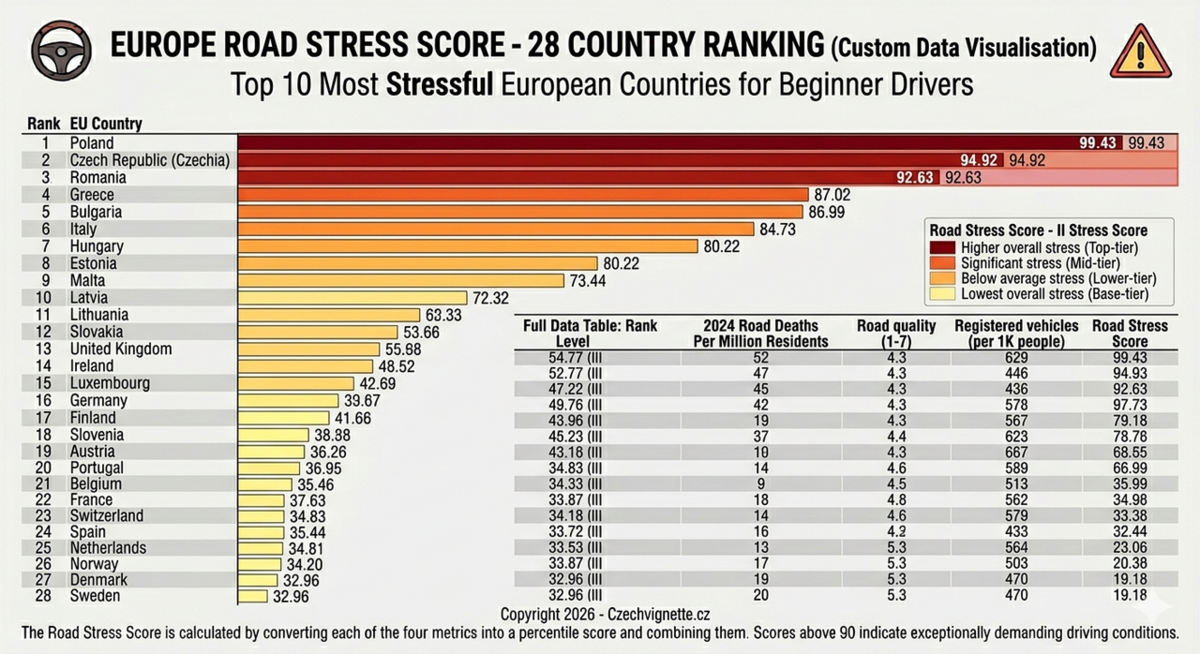
The European motorway specialists at CzechVignette.cz have released a definitive ranking of the most stressful European countries for beginner drivers. The study analysed four key metrics, including traffic congestion levels, road deaths, road quality, and registered vehicles per 1,000 residents, to calculate an overall Road Stress Score, with Poland claiming the unenviable top spot.
Key findings
- Poland tops the ranking with a Road Stress Score of 99.43, combining some of the highest congestion levels in the study (54.77), poor road quality (4.3/7), and 52 road deaths per million residents.
- Czech Republic (Czechia) ranks second with a score of 94.92, driven by high congestion (53.5), below-average road quality (3.9/7), and one of the highest vehicle densities in the study at 608 registered vehicles per 1,000 people.
- Romania ranks third, recording the worst traffic congestion level at 62.5, the highest road death rate at 77 per million residents, and the lowest road quality score in the entire study at just 3/7.
- Italy leads the entire study in registered vehicle density at 701 vehicles per 1,000 people, contributing to its already notorious urban traffic, and ranks sixth overall.
- Malta is a surprising entry at 9th place, recording the lowest road death rate in the top 10 (21 per million residents), yet still ranking highly due to vehicle density (576 per 1,000 people) and poor road quality (3.3/7) on its compact island roads.
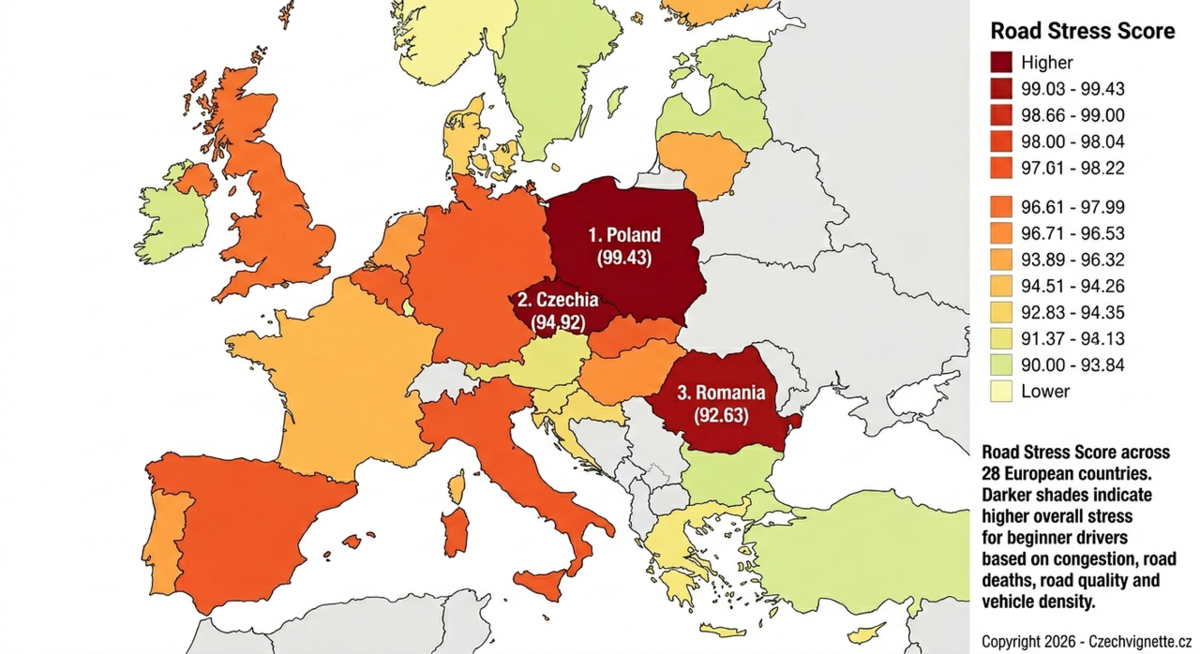
Top 10 most stressful European countries for beginner drivers
| Rank | EU country | Congestion | Road deaths /M | Road quality (1–7) | Vehicles /1k | Stress score |
|---|---|---|---|---|---|---|
| 1 | Poland | 54.77 | 52 | 4.3 | 629 | 99.43 |
| 2 | Czech Republic (Czechia) | 53.5 | 45 | 3.9 | 608 | 94.92 |
| 3 | Romania | 62.5 | 77 | 3 | 444 | 92.63 |
| 4 | Greece | 48.05 | 64 | 4.6 | 579 | 87.02 |
| 5 | Bulgaria | 47 | 74 | 3.4 | 484 | 86.99 |
| 6 | Italy | 38.2 | 51 | 4.4 | 701 | 84.73 |
| 7 | Hungary | 61.9 | 52 | 4 | 447 | 80.22 |
| 8 | Estonia | 40.4 | 50 | 4.7 | 635 | 76.83 |
| 9 | Malta | 50.5 | 21 | 3.3 | 576 | 73.44 |
| 10 | Latvia | 44.9 | 60 | 3.6 | 424 | 72.32 |
Full table and methodology below.
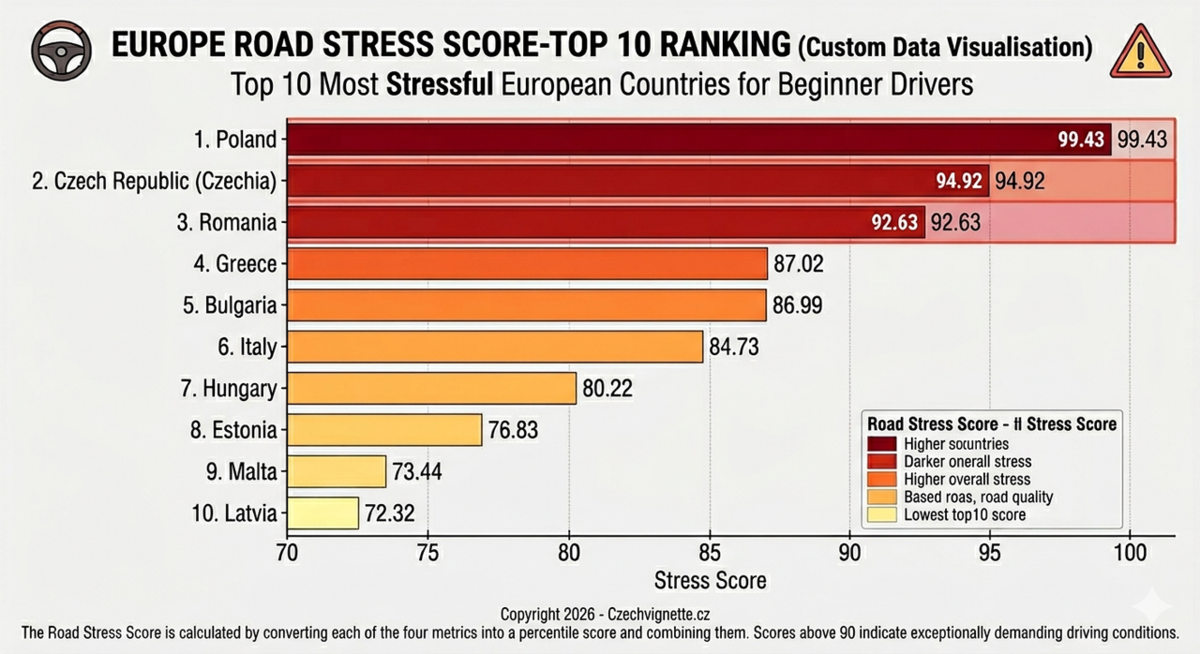
1. Poland — Road Stress Score: 99.43
Poland claims the top spot in the ranking, and the data leaves little room for debate. Its traffic congestion level of 54.77 is the fourth highest in the study, its road quality scores just 4.3/7, and with 629 registered vehicles per 1,000 people, its roads are both heavily used and underprepared for the volume. For a beginner driver, the combination of dense traffic, deteriorating surfaces, and a road death rate of 52 per million residents creates a uniquely unforgiving environment from day one.
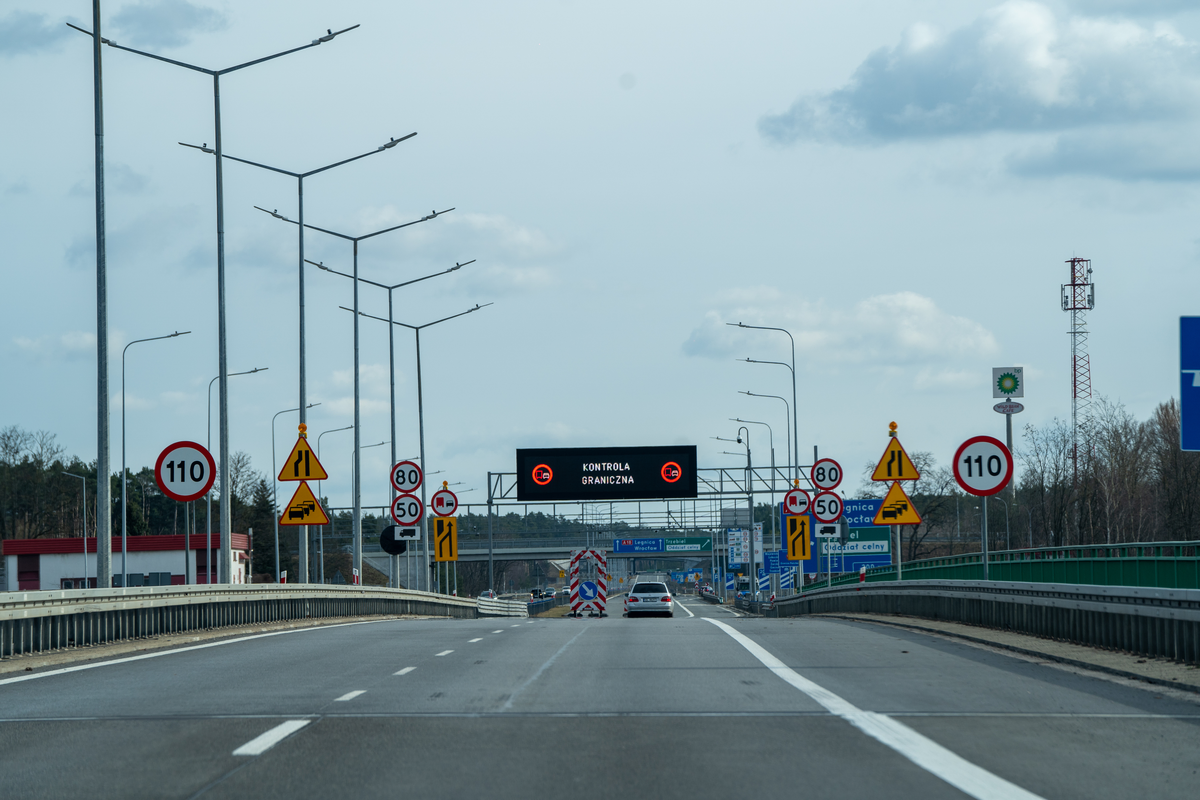
This is compounded by abrupt infrastructure shifts. For instance, recent field logs note that crossing into Poland from Germany on the older A18 stretch introduces immediate, jarring tyre noise at highway speeds, the exact kind of sudden transition that can rattle a beginner’s confidence.
2. Czech Republic (Czechia) — Road Stress Score: 94.92
Czech Republic (Czechia) ranks second with a Road Stress Score of 94.92, with its placement reflecting a challenging picture across the board. High traffic congestion (53.5) coupled with below-average road quality (3.9/7) places it among the most demanding countries in Central Europe for new drivers, while a vehicle density of 608 per 1,000 people means the roads are rarely quiet. For first-time drivers in Czechia, the pressure begins long before they reach the motorway.
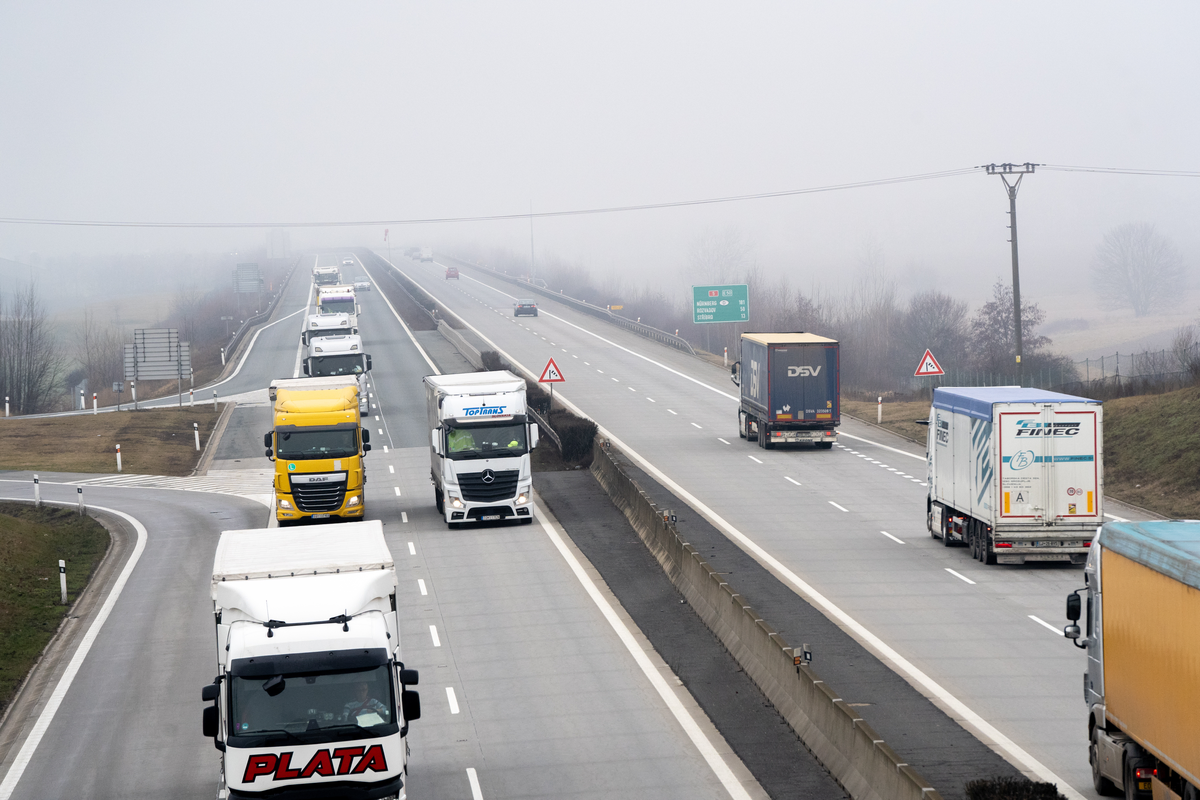
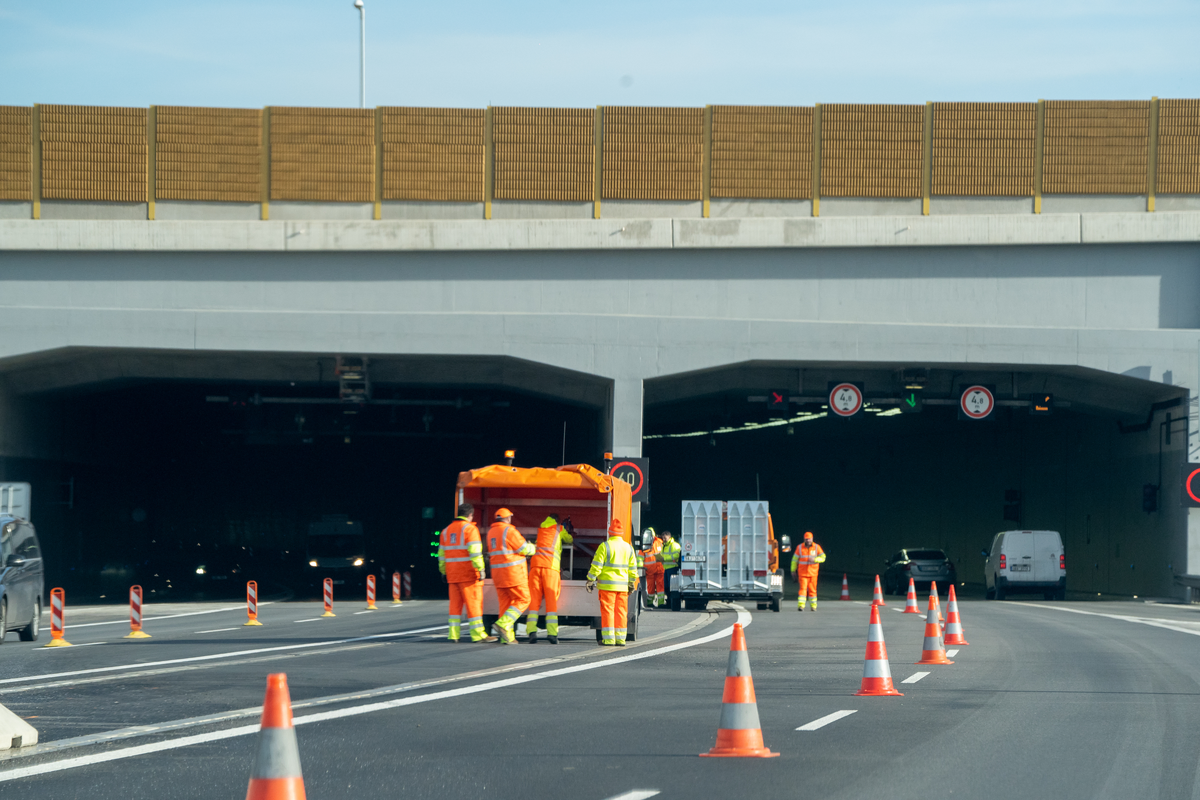
On-the-ground observations highlight hidden stressors the data misses entirely, such as sudden zero-visibility fog patches on the heavy-freight D5 corridor, and confusing construction zones on the D3 that force all traffic onto narrow, shared parallel roads.
Planning motorways in Czechia also means a valid electronic vignette on tolled sections. For routes and how to buy in advance, see our Czech vignette guides.
3. Romania — Road Stress Score: 92.63
Romania ranks third, powered by having the worst scores in three out of four metrics: highest traffic congestion level at 62.5, the highest road death rate at 77 per million residents, and the lowest road quality score at just 3/7. Despite having the second-lowest vehicle density in the entire study (444 per 1,000 people), these conditions make Romanian roads exceptionally unforgiving for beginner drivers, where the state of the surface itself becomes a hazard before congestion is even considered.
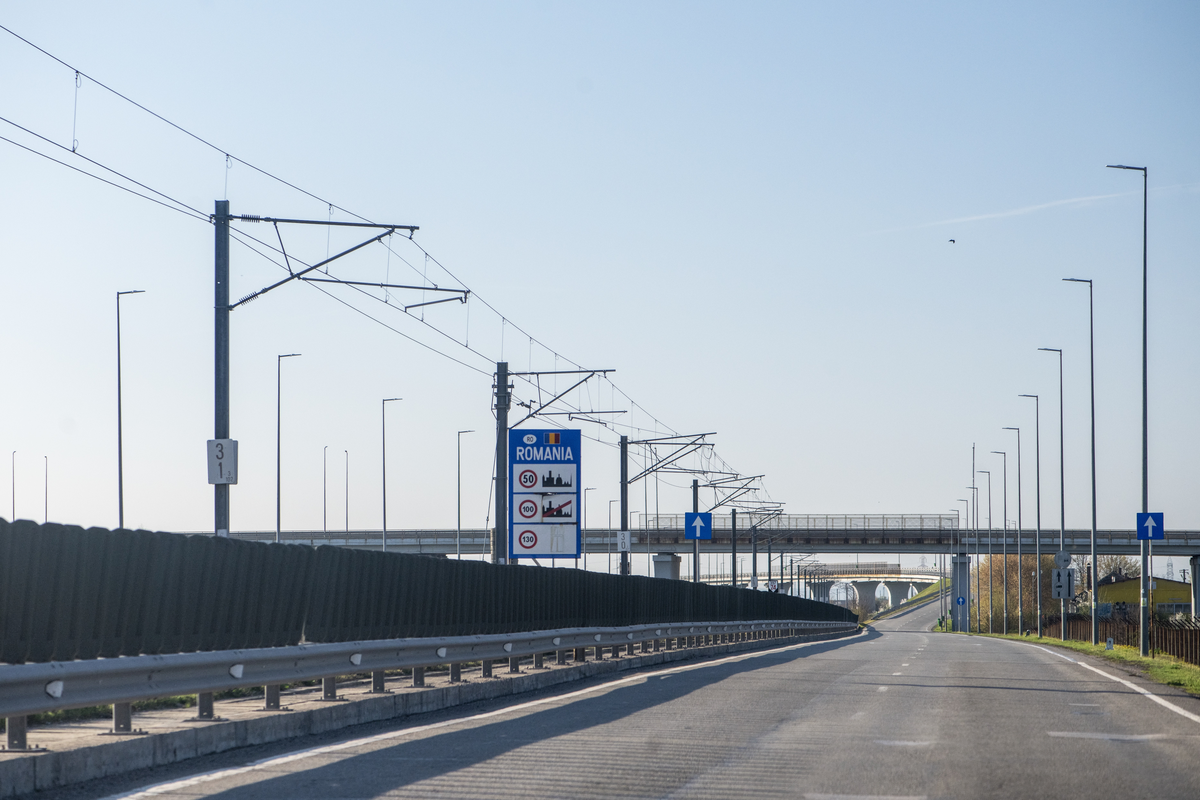
Furthermore, border entries present challenges such as aggressive speed-limit drops, from 130 to 40 km/h in a short span, combined with a strict dual system of both camera and physical police enforcement.
4. Greece — Road Stress Score: 87.02
Greece enters fourth place, where its road death rate of 64 per million residents, alongside high registered vehicle density (579 per 1,000 people), and notable traffic congestion level (48.05) make for a stressful introduction to driving. Its road quality score of 4.6/7 is one of the higher marks in the top 10, yet it is not enough to offset the pressure created by the sheer volume of vehicles and elevated fatality rates.
5. Bulgaria — Road Stress Score: 86.99
Bulgaria sits fifth with a Road Stress Score almost identical to Greece’s, demonstrating just how closely contested the middle of the table is. A road death rate of 74 per million residents, the second highest in the study, and road quality of just 3.4/7 make it a particularly challenging environment alongside relatively high traffic congestion level (47.0) despite recording lower registered vehicle density.
Adding to the stress, vignette enforcement in Bulgaria is camera-based and starts the exact moment a vehicle joins the motorway, offering zero grace period for a beginner trying to adjust to their new surroundings.
Expert comment

“What this data makes clear is that the challenge for beginner drivers isn’t just about confidence behind the wheel. It’s about the environment they’re placed in. Countries like Poland and Czechia combine dense, busy roads with infrastructure that hasn’t kept pace with the volume of vehicles, creating a genuinely demanding experience for anyone still building their driving skills.”
“What our field research keeps confirming is that the most demanding moments for any driver are the transitions. The first kilometres after crossing into a new country, a sudden lane drop in a construction zone, or navigating an unfamiliar toll gantry. In countries like Bulgaria and Romania, camera enforcement starts the moment you join the motorway with no reliable grace period. That layer of instant pressure simply does not exist in the headline numbers, but it is exactly where a beginner driver’s confidence either builds or breaks.”
— Mattijs Wijnmalen, CEO, CzechVignette.cz
Methodology
This study identifies the most stressful European countries for beginner drivers by analysing four key metrics: traffic congestion levels, road deaths per million residents, road quality, and registered vehicles (per 1k people). Data was gathered from the TomTom Traffic Index, the ETSC 2025 PIN report, the World Economic Forum, Eurostat, and World Population Review. To determine the final rankings, each metric was converted into a percentile score, which was then used to calculate the overall stress level for each country.
Full results: all 28 countries
| Rank | Country | Congestion | Road deaths /M | Road quality (1–7) | Vehicles /1k | Stress score |
|---|---|---|---|---|---|---|
| 1 | Poland | 54.77 | 52 | 4.3 | 629 | 99.43 |
| 2 | Czech Republic (Czechia) | 53.5 | 45 | 3.9 | 608 | 94.92 |
| 3 | Romania | 62.5 | 77 | 3 | 444 | 92.63 |
| 4 | Greece | 48.05 | 64 | 4.6 | 579 | 87.02 |
| 5 | Bulgaria | 47 | 74 | 3.4 | 484 | 86.99 |
| 6 | Italy | 38.2 | 51 | 4.4 | 701 | 84.73 |
| 7 | Hungary | 61.9 | 52 | 4 | 447 | 80.22 |
| 8 | Estonia | 40.4 | 50 | 4.7 | 635 | 76.83 |
| 9 | Malta | 50.5 | 21 | 3.3 | 576 | 73.44 |
| 10 | Latvia | 44.9 | 60 | 3.6 | 424 | 72.32 |
| 11 | Lithuania | 44.53 | 42 | 4.8 | 598 | 71.19 |
| 12 | Slovakia | 44.6 | 48 | 4 | 502 | 70.06 |
| 13 | United Kingdom | 46.12 | 25 | 4.9 | 603 | 63.26 |
| 14 | Ireland | 60.7 | 32 | 4.4 | 466 | 62.13 |
| 15 | Luxembourg | 41.3 | 27 | 5.5 | 670 | 56.46 |
| 16 | Germany | 39.58 | 33 | 5.3 | 590 | 55.33 |
| 17 | Finland | 35.98 | 31 | 5.3 | 666 | 54.20 |
| 18 | Slovenia | 36.7 | 32 | 4.9 | 587 | 51.94 |
| 19 | Austria | 45.4 | 38 | 6 | 569 | 51.94 |
| 20 | Portugal | 35.45 | 60 | 6 | 571 | 50.84 |
| 21 | Belgium | 34.45 | 40 | 4.4 | 513 | 49.72 |
| 21 | France | 35.28 | 48 | 5.4 | 579 | 49.72 |
| 23 | Switzerland | 43.27 | 28 | 6.3 | 542 | 36.14 |
| 24 | Spain | 31.3 | 36 | 5.7 | 544 | 31.60 |
| 25 | Netherlands | 36.64 | 38 | 6.4 | 513 | 30.47 |
| 26 | Norway | 29.85 | 16 | 4.5 | 517 | 29.37 |
| 27 | Denmark | 41.13 | 24 | 5.6 | 478 | 28.21 |
| 28 | Sweden | 32.96 | 20 | 5.3 | 470 | 19.18 |
Driving in Czechia?
Czechia ranks second in this study for overall road stress. If your route includes motorways, buy your Czech electronic vignette before you travel at CzechVignette.cz.