
- EUR €
- CZK Kč
- DKK kr
- HUF Ft
- PLN zł
- RUB ₽
- RON lei
- RSD дин.
- MDL L
- TRY ₺
- UAH ₴
- SEK kr
- CHF Fr
- NOK kr
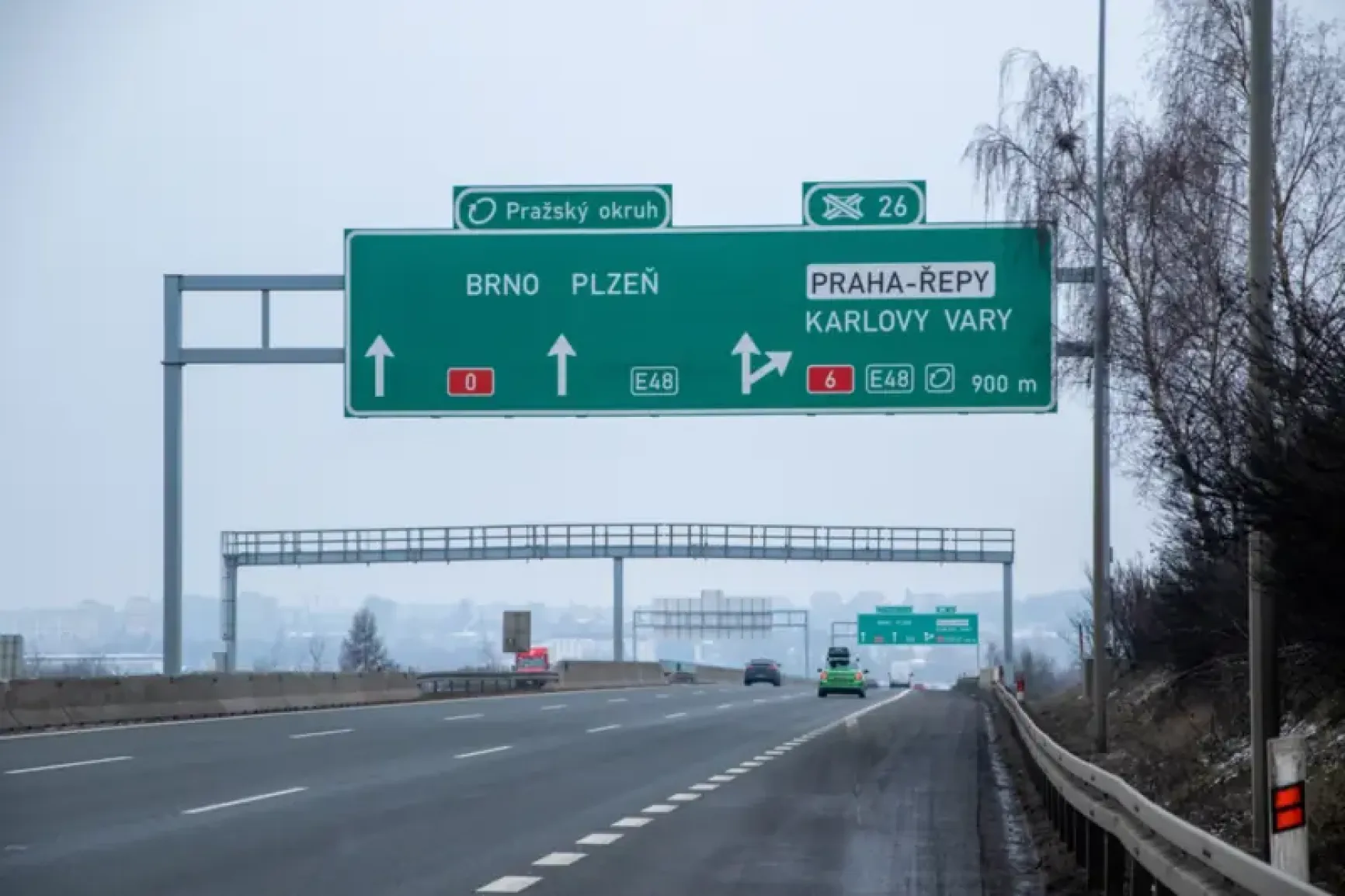
Czech Vignette Glossary
Every toll term you’ll come across explained in plain English.
Driving in the Czech Republic comes with a few unfamiliar terms, like eDalnice, SFDI, and MYTO, among others. If you don’t speak Czech, they can look intimidating. We’ve put together this glossary to break everything down in Plain English. No legal jargon. No technical terms. No bureaucratic riddles. Just clear explanations, so you know exactly what you’re dealing with.
This glossary is maintained by the team at Czechvignette.cz. We’ve worked in the European tolling industry since 2014 and have personally driven more than 10,000 km of Czech motorways to verify the details ourselves. We review and update this page every month—and immediately when regulations change.
Last updated: February 2026
How to Use This Glossary
We’ve grouped terms by topic to make them easy to find. Looking for something specific? Press Ctrl+F (or Cmd+F on Mac) to search for the word directly.
Vignette Basics
These are the terms you’ll see most often when buying or reading about Czech motorway tolls.
Vignette (Dálniční známka)
A vignette is simply proof that you’ve paid to use the Czech motorways and expressways. Think of it as your motorway pass. In Czech, it’s called a dálniční známka, which literally translates to “motorway stamp.”
Before 2021, it was a physical sticker you’d buy at a petrol station and stick on your windscreen. Today, it’s fully digital. Your licence plate is registered in a national database, and roadside cameras check it automatically. No sticker. Nothing to display. Nothing to carry.
You might also see it called: highway sticker, motorway sticker, toll sticker, e-vignette, Czech road tax, CZ vignette.
E-Vignette (Elektronická dálniční známka)
An e-vignette is just the digital version of the Czech vignette—and since 2021, it’s the only version. The terms vignette and e-vignette are used interchangeably but mean the same thing.
When you buy one, your licence plate is registered in the eDalnice system. That’s all there is to it.
After purchase, you’ll receive a confirmation PDF by email. This document is your receipt, not the vignette itself. The actual vignette exists as a digital registration tied to your licence plate number.
What you receive:
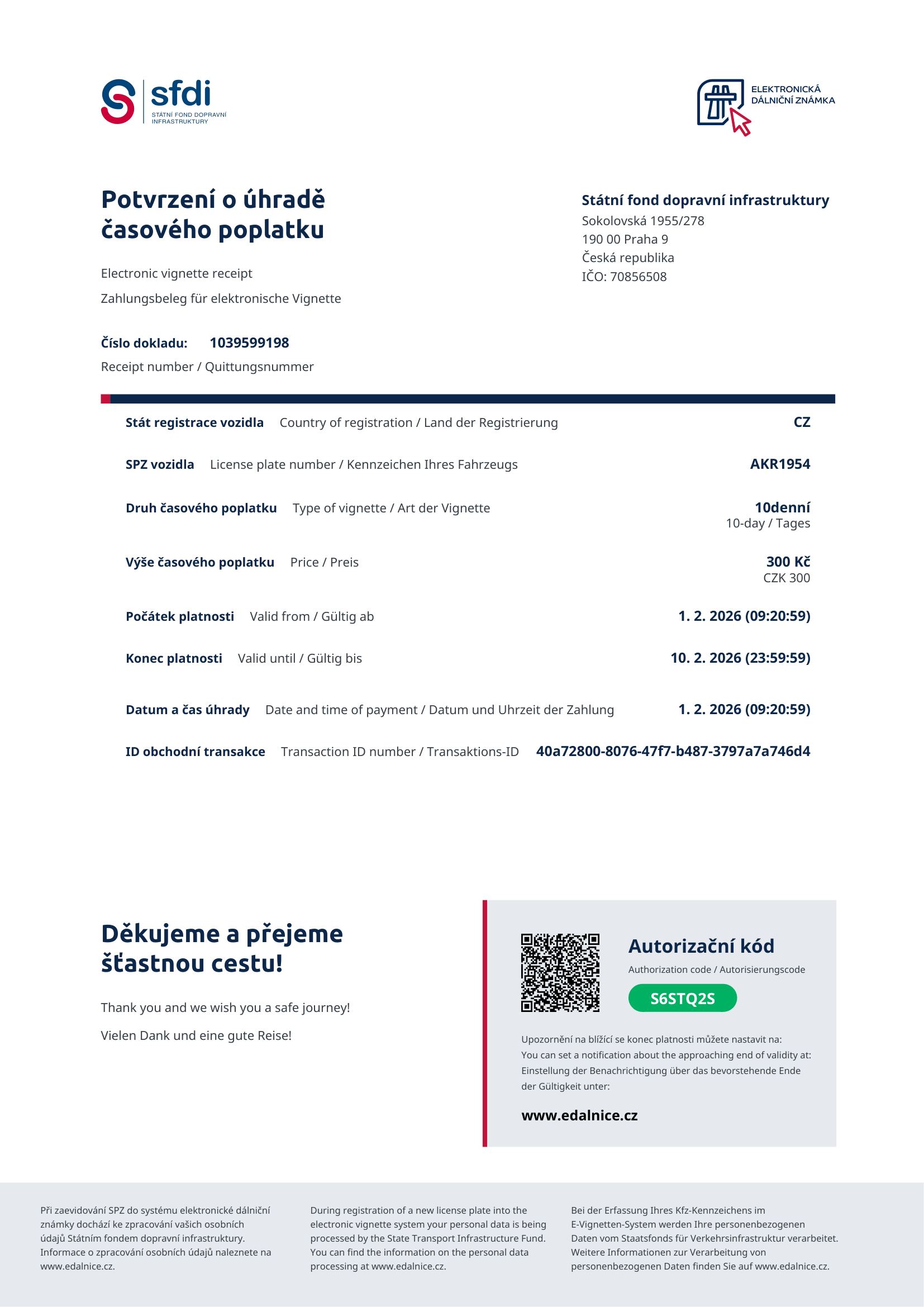
Example of an official SFDI e-vignette confirmation receipt. This shows exactly what you'll receive after purchase — including license plate, validity period, price, and authorization code.
Digital Vignette
Exactly the same thing as an e-vignette. Different countries use different terms. Austria calls theirs a “digitale vignette,” Hungary calls it “e-matrica.” In the Czech Republic, both terms mean the same thing: a licence-plate-based digital toll registration with no physical component.
Validity Period
The amount of time that your vignette is valid. In the Czech Republic, you have the option of selecting from four validity periods:
1 Day
Valid for 24 hours from the starting date/time selected.
10 Days
Valid for 10 consecutive calendar days. Most people purchase this type of vignette for holidays and transit trips.
30 Days
Valid for 30 consecutive calendar days.
1 Year
Valid from December 1st of the previous year until January 31st of the following year (i.e., a 2026 Annual Vignette is valid from December 1, 2025 – January 31, 2027).
License Plate Registration
The way the Czech Republic's vignette system functions. Rather than a sticker, your license plate number is stored in a centralised database. Cameras located throughout the Czech Republic's motorways and expressways read your plate and check it against the database in real-time. If your plate is not registered, you could be issued a fine.
That's why it is so important to enter your license plate number correctly when you purchase your vignette. A single misentered character will cause the system to not recognise your vehicle.
Made a mistake? Here’s how to fix itRoads & Infrastructure
Understanding Czech road classifications helps you know where a vignette is required and where it isn’t.
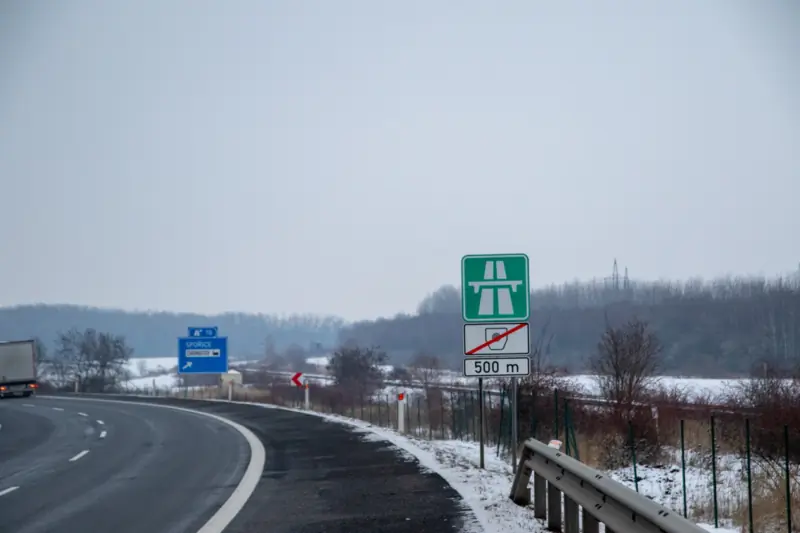
Czech motorway start sign indicating vignette-required road begins in 500m, near Spořice and Chomutov. Photo from our team\'s January 2026 road trip.
Motorway (Dálnice)
Motorways are the highest category of road in the Czech Republic. They’re marked with the letter “D” followed by a number: D1, D5, D8, and so on. They connect Prague to major cities and international borders. All motorways require a valid vignette.
The busiest motorway is the D1, which runs from Prague to Brno and continues on toward Slovakia. If you’re driving across the Czech Republic, there’s a good chance you’ll end up on this road.
Expressway (Rychlostní silnice)
Older maps may show roads marked with the letter “R”. These used to be expressways and had slightly different rules. Most of them have now been reclassified as D-roads and require a vignette, just like motorways. So, if your GPS says “R-road,” don’t assume it’s toll free. It probably isn’t.
Toll-Free Sections (Bez poplatku)
Some motorway sections don’t require a vignette. These are marked with “BEZ POPLATKU” (meaning “without toll”) or with a crossed-out vignette symbol.
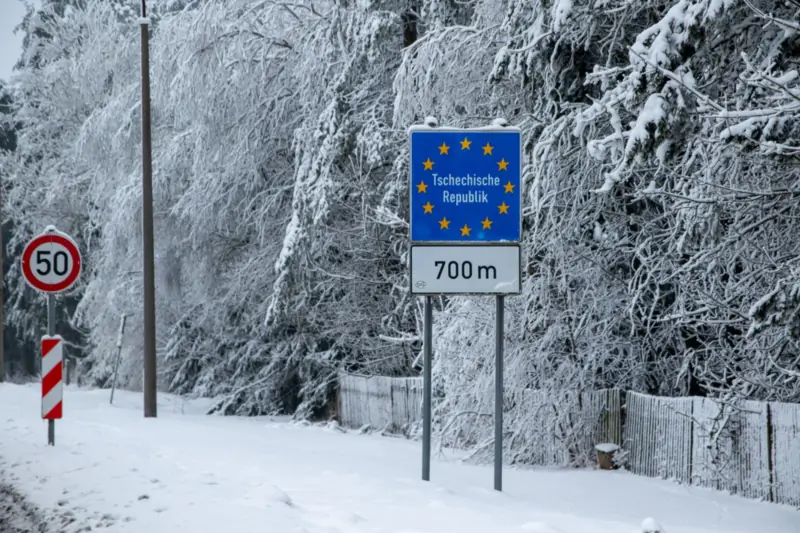
You’ll often find these toll-free stretches right after border crossings, leading to the nearest service area. This gives drivers time to stop and buy a vignette if they forgot.
From our own experience:
Don’t rely on border kiosks being open. On our 31 January 2026 test drive, we personally encountered closed machines (at the Schirnding–Cheb border) with no alternative signage posted. The safest option is always buying online before you travel.
Toll Road Network
The toll road network is the full network of roads in the Czech Republic that require a vignette. It includes all motorways (D-roads) and reclassified expressways (former R-roads). The Czech motorway network connects Prague to Brno, Ostrava, Plzeň, Liberec, and other major border crossings. The total network covers over 1,200 km.
See the full interactive toll road mapFirst and Second Class Roads
These lower-category roads do not require a vignette. If your GPS routes you along first-class (marked with “I/” and a number) or second-class roads, you can drive them freely. Some drivers use these to avoid tolls, but they’re slower, often passing through villages, and usually add travel time.
Vehicles & Categories
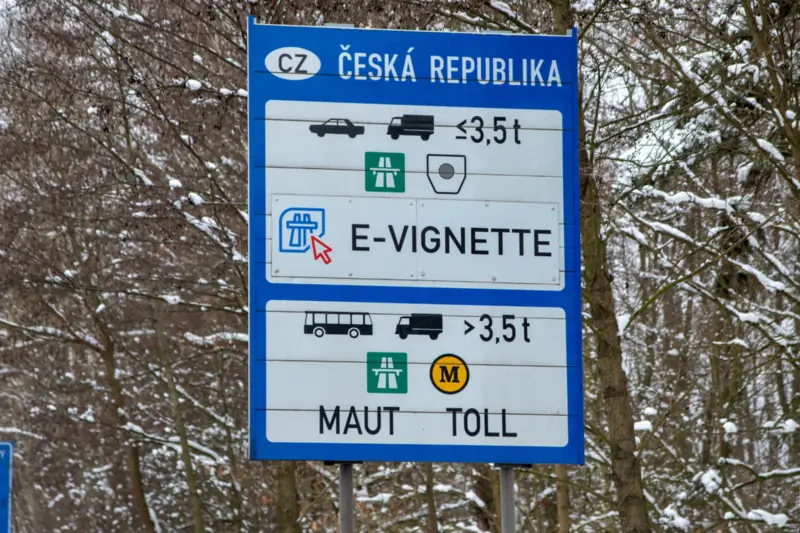
Czech border sign explaining e-vignette requirement for vehicles under 3.5t and toll for vehicles over 3.5t. Photo from our team\'s road trip.
Vehicles Under 3.5 Tonnes
Most cars, SUVs, vans, and campervans fall into this category. These vehicles need a vignette. The weight refers to the vehicle’s maximum technically permissible mass (not what it currently weighs), as stated on your registration document.
Vehicles Over 3.5 Tonnes
Heavy vehicles use the distance-based MYTO system instead of flat-rate vignettes. This includes lorries (HGVs), large motorhomes, and buses.
Motorcycles
Good news: motorcycles are completely exempt from needing a vignette. Motorcycles can use all motorways and expressways without paying a toll. This applies to all types: two-wheelers, three-wheelers, and quad bikes.
Electric and Hybrid Vehicles
In 2024 and early 2025, fully electric vehicles were exempt from the Czech vignette. As of 2026, that exemption has been reduced. Fully electric vehicles now receive a 50% discount on all vignette prices. Plug-in hybrids pay the full rate.
Note:
To get the EV discount, make sure your vehicle’s fuel type is correctly selected during checkout.
Rental Cars
Rental cars are subject to the same rules as private vehicles. If the rental car comes with a vignette already registered, the agency should confirm this. If not, you’re responsible for buying one before you travel. We always recommend that you check with your rental company before driving onto a motorway.
Payment & Pricing
Vignette Price
The official fee set by the SFDI for using Czech motorways. Prices are set in Czech koruna (CZK) and adjusted periodically. The most recent price change was in January 2026. The price depends on the duration you choose.
See current 2026 pricesService Fee
When you buy through a third-party provider, like Czechvignette.cz, you pay the official vignette price plus a service fee. In our case, the service fee covers multilingual customer support (23+ languages), multiple (20+) secure payment methods, fine coverage if we make an error, and instant delivery of your confirmation PDF.
The total price (vignette + service fee) is always shown upfront before you pay. We pride ourselves on no hidden charges.
Czech Koruna (CZK / Kč)
The official currency of the Czech Republic. All vignette prices are set in CZK. If you buy directly through the eDalnice portal, you’ll pay in CZK. Your bank may apply a currency conversion fee. Some third-party platforms—including Czechvignette.cz—allow you to pay in your own currency and handle the conversion for you.
Local Payment Methods
These are payment options specific to certain countries. For example, iDEAL (Netherlands), Bancontact (Belgium), BLIK (Poland), Przelewy24 (Poland), Cartes Bancaires (France), EPS (Austria). We offer 20+ local payment methods through our partnership with Mollie.
See all payment methods by countryEnforcement
What happens if you drive without a vignette—and what the system looks like in practice.
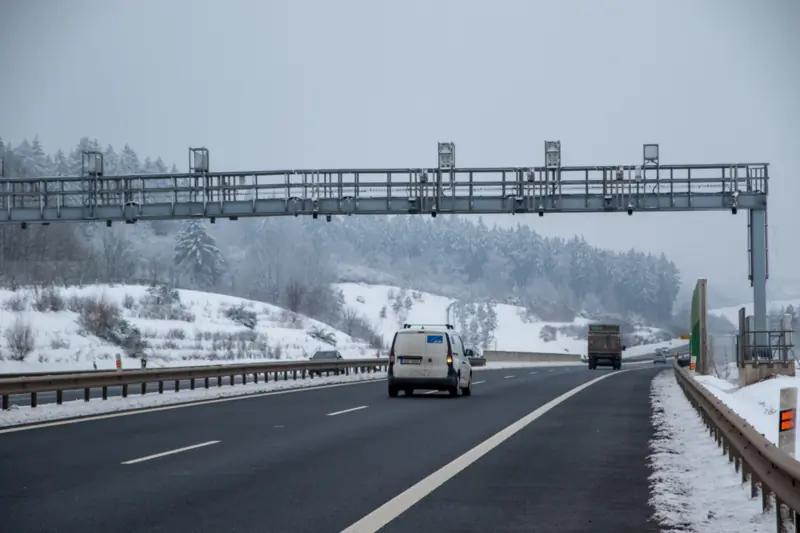
Czech motorway toll enforcement camera gantry checking vehicles for valid e-vignettes in winter. Photo from our team\'s road trip showing what drivers actually see on the road.
Automatic Number Plate Recognition (ANPR)
Cameras mounted above motorways and at various checkpoints read every passing licence plate and check it against the eDalnice database. If your plate isn’t registered, the system flags it and issues a fine.
You won’t see barriers or a toll booths along the way. Everything happens automatically, which is why some drivers don’t realise they’ve been caught until a fine arrives at their home weeks later.
Fine (Pokuta)
Driving without a valid vignette can lead to significant fines. On-the-spot fines can be up to CZK 5,000 (approx. €200). For more serious cases or repeat offenders, the fine is sent by post and can reach CZK 100,000 (approx. €4,000).
Our commitment:
If you receive a fine because of an error on our side—for example, a registration delay or system fault—we’ll provide legal support and reimburse the fine.
Read our fine coverage policyToll Gantry
These are the overhead metal structures on Czech motorways that hold ANPR (automatic number plate recognition) cameras. You drive under them without stopping and they check your licence plate number automatically. Some drivers confuse these with speed cameras, but they serve a different purpose.
Border Crossings
These are some terms you’ll encounter when entering the Czech Republic by road.
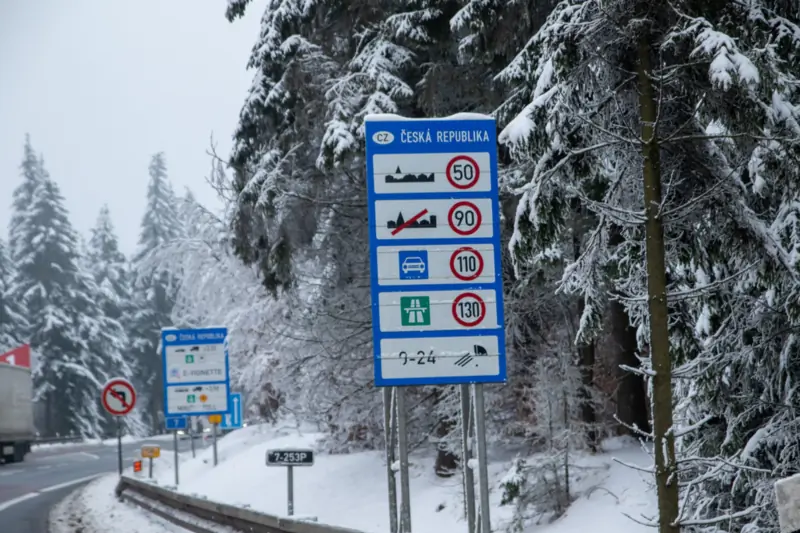
Czech border information sign showing speed limits – 50 in towns, 90 outside towns, 110 on expressways and 130 on motorways.
Border Crossing Point
A border crossing is the point where you cross from another country into the Czech Republic. Major crossings include Rozvadov (from Germany/A6), Pomezí nad Ohří (from Germany/A93), and Petřovice (from Poland). The first stretch of motorway after most major border crossings is toll-free, giving you time to pull over and buy a vignette if needed. However, we always recommend buying your vignette online before you cross the border.
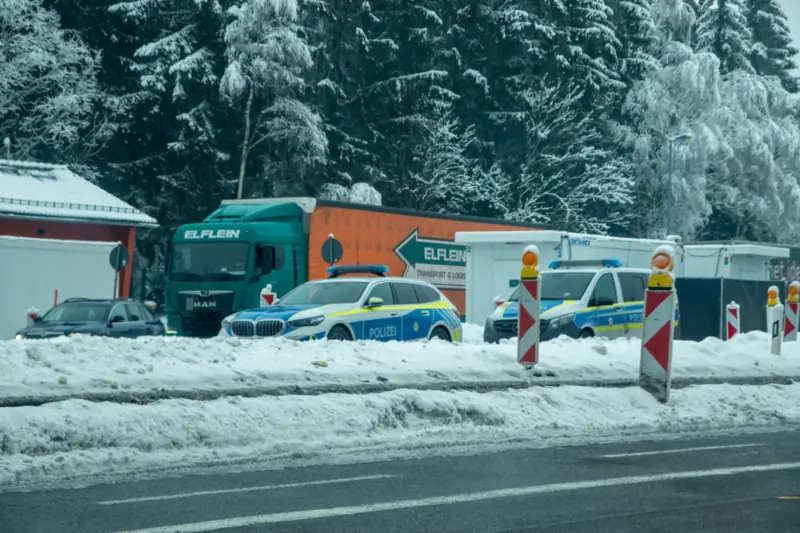
German Polizei vehicles at the Czech-German border crossing checkpoint in winter. Photo from our January 2026 road trip.
Self-Service Vignette Machine
You can find self-service vignette machines at some border crossing points and petrol stations. They accept bank cards and register your licence plate on the spot. During peak travel times, queues for these machines can be long. Our photographer Ujjawal tested some in Prague in December 2025 and documented the process on video.
Watch: How the vignette vending machine worksBEZ POPLATKU
This is the Czech term for “without toll.” If you see this sign, you’re on a motorway section that does not require a vignette. These sections of road are usually found near border crossings and certain urban bypasses.
Common Abbreviations
Quick reference for abbreviations you’ll see on Czech roads, in official documents, and on this site.
| Abbreviation | Full Term | Definition |
|---|---|---|
| CZK / Kč | Czech koruna (Česká koruna) | The Czech currency. All official vignette prices are in CZK. |
| D + number | Dálnice (motorway) | Czech motorway designation. D1, D5, D8, etc. All require a vignette. |
| eDalnice | Elektronická dálnice | The official government vignette portal at edalnice.gov.cz. |
| EV | Electric vehicle | Eligible for 50% vignette discount in 2026. |
| HGV | Heavy goods vehicle | Vehicles over 3.5t. Use MYTO, not a vignette. |
| KvK | Kamer van Koophandel | Dutch Chamber of Commerce. Our registration: 85804363. |
| MYTO CZ | Mýtný systém | Distance-based toll system for vehicles over 3.5 tonnes. |
| OBU | Onboard unit | Device used by heavy vehicles for the MYTO toll system. |
| SFDI | Státní fond dopravní infrastruktury | State Fund for Transport Infrastructure. Operates the vignette system. |
| VAT / BTW | Value Added Tax / Belasting Toegevoegde Waarde | Tax included in the vignette price. Our VAT number: NL863747814B01. |
Didn’t Find What You’re Looking For?
This glossary covers the most common terms you’ll encounter, but Czech tolling has plenty of edge cases. If you’re looking for something we haven’t included:
Call us: +31 (0) 85 303 39 23
7 Days a Week: 04:00–01:00 CET — Average Response Time: Under 10 Minutes
We’ll answer in your language, and if your question reveals a gap in this glossary, we’ll add it.
Frequently Asked Questions
Quick answers to the questions people ask us most about Czech toll terminology.
What is the difference between a vignette and e-vignette?
Yes. Since 2021, all Czech vignettes are electronic. The terms “e-vignette,” “digital vignette,” and “vignette” all refer to the same thing: a licence plate registration in the eDalnice system.
What’s the difference between a vignette and MYTO?
A vignette is a flat-rate toll for light vehicles under 3.5 tonnes. MYTO is a distance-based toll for heavy vehicles over 3.5 tonnes. They’re two completely separate systems. Most private cars, vans, and campervans only need a vignette.
Do I need to print anything after buying?
No. Your vignette is linked to your licence plate in the national database. The PDF you receive by email is a receipt for your records, not something you need to show. Cameras check your plate automatically as you travel.
What does BEZ POPLATKU mean on a road sign?
“Without toll.” It marks sections of motorway where you can drive without a vignette. You’ll usually see these near border crossings.
What’s eDalnice?
The official Czech government portal (edalnice.gov.cz) where vignettes are registered and can be verified. Whether you buy through the government site, a self-service machine, or Czechvignette.cz, your registration ends up in the same system.
Related Articles
How It Works
Buy your vignette in 3 simple steps
2026 Vignette Pricing
Current prices and what changed
Why Choose Us
Fine coverage, 23+ languages, 20+ payment meethods
About Us
The team behind Czechvignette.cz
Contact Us
WhatsApp, phone, live chat
Editorial Policy
How we create and verify our content