

Lead travel authority and road expert

In this article
Czech Traffic Fines 2026: Complete Guide for Foreign Drivers
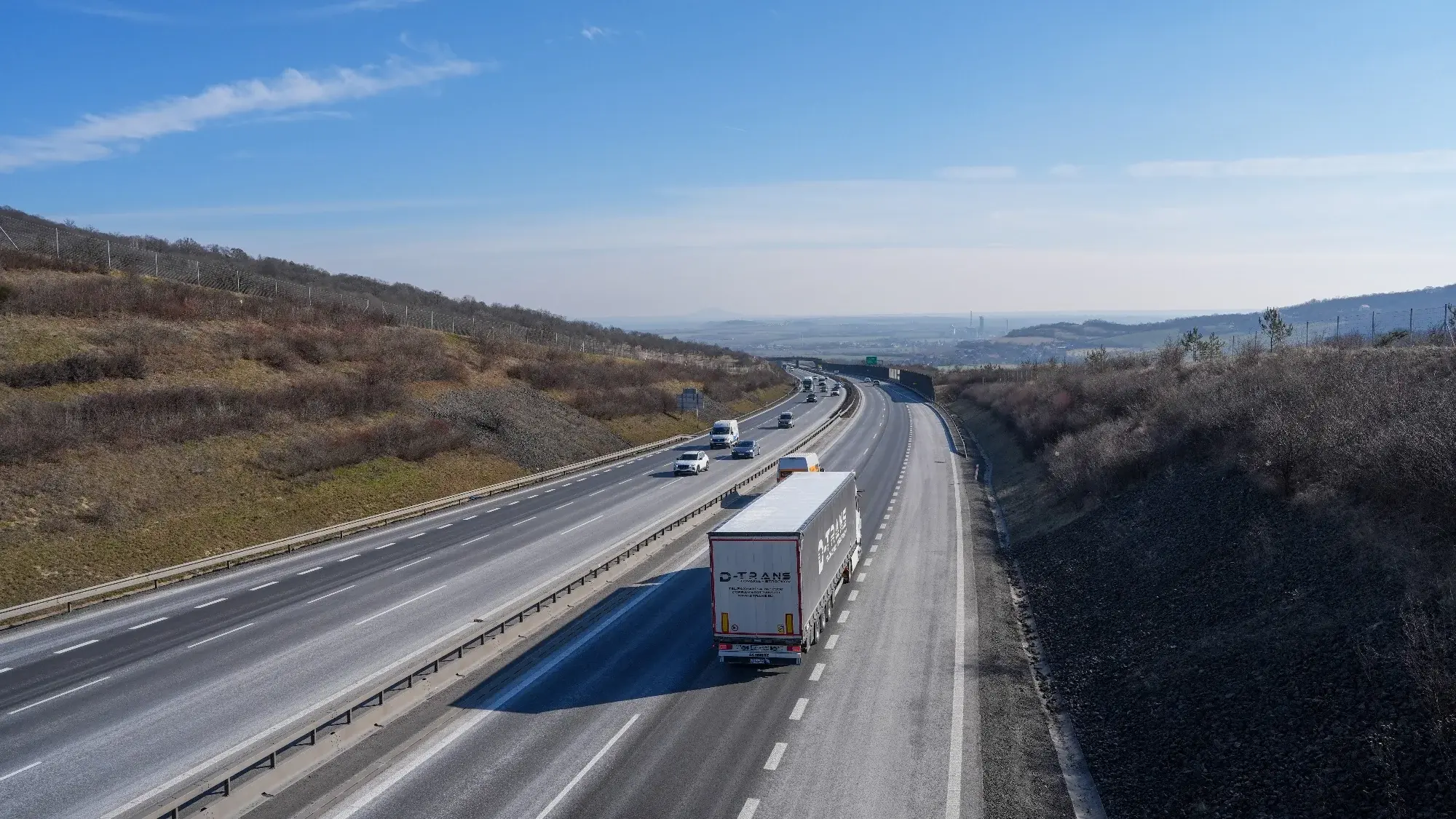
Every driver in the Czech Republic can make mistakes on the road — sometimes minor, sometimes costly. A lapse in concentration, a missed sign, or simply not knowing the rules can result in a fine, penalty points, or even a temporary driving ban. And unlike some countries where foreign drivers slip through the net, Czech enforcement is active and cross-border collection is real for EU-registered vehicles.
The Czech Road Traffic Act defines penalties for every category of offence. This guide walks through what those are in 2026: from speeding and drink driving to red lights, mobile phones, mandatory equipment, and how the points system applies to non-residents.
Driving across the Czech road network in February and March 2026, one thing stood out: how consistently the rules are enforced. Speed limit signs appear frequently and change without much warning — construction zones on roads like the D6 drop limits from 90 to 70 to 50 km/h within a short stretch. The system is designed to catch drivers who are not paying attention. Knowing the rules in advance is the simplest way to avoid finding that out the hard way.
Key facts at a glance
- • Speeding (serious, +40 km/h in town): up to CZK 25,000 + possible driving ban
- • Running a red light: up to CZK 25,000 + 6 points
- • Drink driving: up to CZK 75,000 + ban — zero tolerance (0.0 per mille)
- • Points system: 12 points = automatic licence loss
- • Operator liability: registered owner fined when camera cannot ID driver
- • EU cross-border enforcement: applies to DE / PL / AT drivers
Czech Traffic Fines: The Full Penalty Table
The table below covers the most common offences foreign drivers encounter on Czech roads. On-the-spot fines are settled directly with the officer; administrative fines apply when the case goes to proceedings or is processed via camera enforcement. Penalty points are recorded in the Czech driving register and apply to all drivers including non-residents.
| Offence | On-the-spot (CZK) | Administrative (CZK) | Points |
|---|---|---|---|
| Speeding up to +10 km/h | Up to 1,500 | 2,000–5,000 | — |
| Speeding +10 km/h and more | 1,500–2,000 | 2,000–5,000 | 2 |
| Speeding +20 km/h (town) / +30 km/h (road) | 2,500–3,500 | up to 10,000 | 4 |
| Speeding +40 km/h and more (town) | — | up to 25,000 | 6 |
| Running a red light | up to 5,500 | up to 25,000 | 6 |
| Failure to stop at Stop sign | 2,500 | 2,500–7,500 | 5 |
| Overtaking where forbidden | 4,500–5,500 | 7,000–25,000 | 6 |
| Level crossing violation | 4,500–5,500 | 7,000–25,000 | 6 |
| Mobile phone while driving | 2,500–3,500 | 4,000–10,000 | 4 |
| Seatbelt not worn | 1,500–2,000 | up to 5,000 | — |
| No entry / improper parking | up to 2,000 | up to 5,000 | 0–2 |
| Driving under the influence of alcohol or other intoxicating substances | — | 7,000–25,000 (~€280–1,000) | 6 (if more than 0.3‰) |
| Refusal to submit to a test for alcohol and other substances | — | 25,000–75,000 | 6 |
| Missing winter equipment (Nov–Mar) | 1,500–2,500 | — | — |
| No valid vignette | 5,000 | up to 20,000 (~€800) | — |
Czech Speeding Fines & Other Road Penalties
Speeding
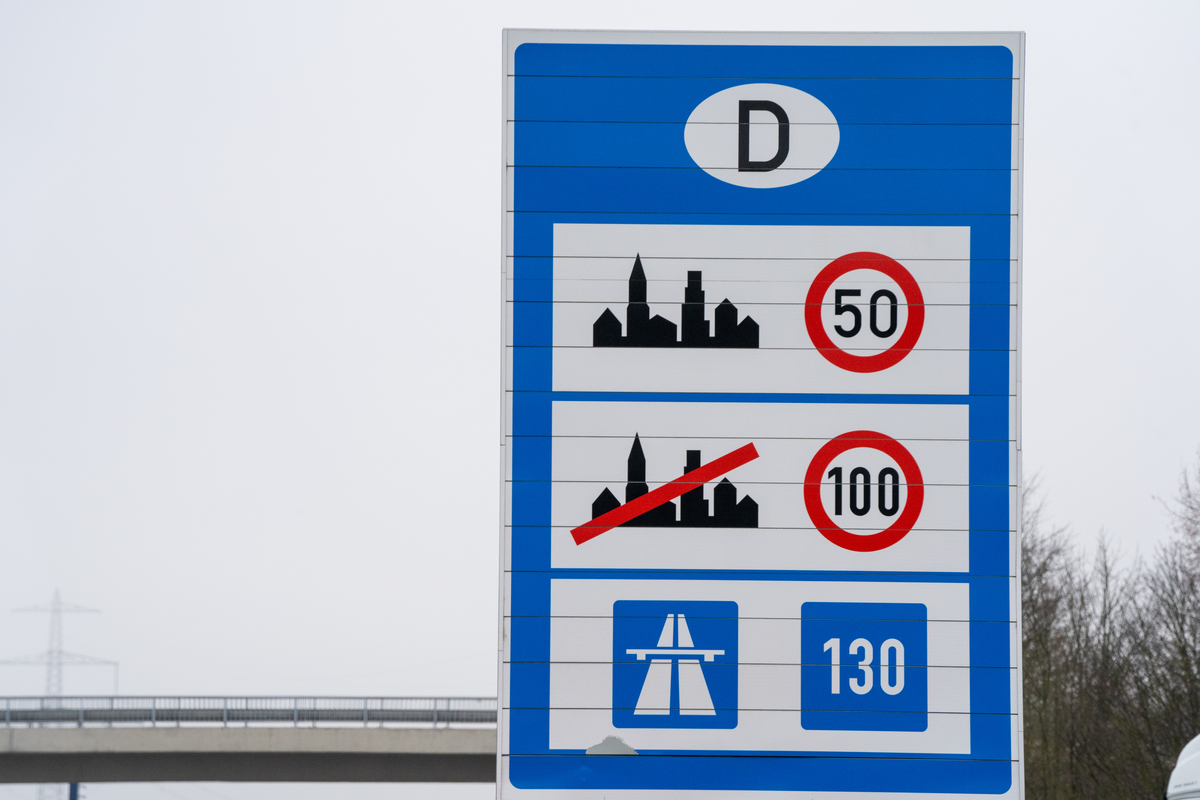
Standard speed limits in Czech Republic are 50 km/h in built-up areas, 90 km/h on open roads, and 130 km/h on motorways. These limits are strictly enforced by fixed radar cameras, mobile units, and — as we observed during our February 2026 field research on the D5 — unmarked mobile enforcement vehicles that check compliance electronically while in traffic. Construction zones on Czech motorways are common on the D6, D7, and D8; limits in these zones drop to 70 or 50 km/h and are actively monitored. For a full list of which roads fall under the toll and vignette network, see our Czech toll roads guide.
Serious excess — 40 km/h or more over the limit in a built-up area — carries up to CZK 25,000, six penalty points, and a possible driving ban of 12 to 18 months. This is one of the most common routes to licence loss on Czech roads.
Running a Red Light
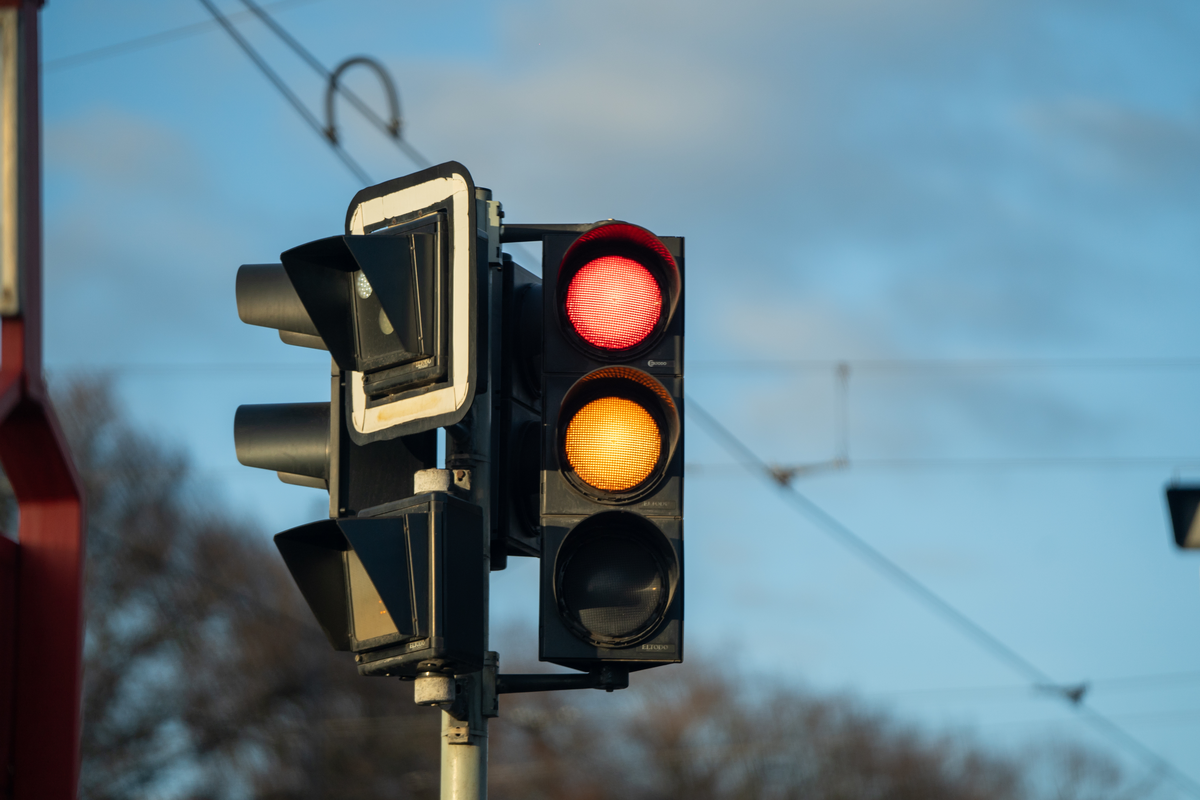
Running a red light is one of the most serious offences in Czech traffic law and among the leading causes of licence loss. The on-the-spot fine reaches CZK 5,500; administrative proceedings can result in up to CZK 25,000, six penalty points, and a possible driving ban of 4 to 6 months. An important rule for foreign drivers: Czech law requires a vehicle to stop at an amber light if it is safe to do so. Treating amber as an acceleration signal — common practice in many other countries — is a finable offence, and camera footage makes it straightforward to prove.
Failure to Stop at a Stop Sign
Failing to come to a complete stop at a Stop sign carries an on-the-spot fine of CZK 2,500 or CZK 2,500–7,500 in administrative proceedings, plus five penalty points. Czech law requires the vehicle to come to a full stop before the junction boundary — slowing down does not satisfy the requirement, and camera evidence is regularly used.
Overtaking and Level Crossings
These are among the most serious traffic offences in the Czech penalty system. According to the sanctions table, both forbidden overtaking and improper entry onto a level crossing carries an on-the-spot fine of CZK 4,500–5,500 or CZK 7,000–25,000 in administrative proceedings, plus 6 penalty points. Source: besip.gov.cz (BESIP).
Alcohol and Drugs
The Czech Republic applies a strict zero-tolerance approach to alcohol and drugs while driving. Under the BESIP sanctions table, driving under the influence of alcohol or another addictive substance can result in a fine of CZK 7,000–25,000 in administrative proceedings, 6 penalty points, and a driving ban of 6 to 18 months. Refusing to undergo an alcohol or drug test is punished even more severely, with a fine of CZK 25,000–75,000, 6 penalty points, and a driving ban of 18 to 36 months.
Mobile Phone Use and Seatbelts
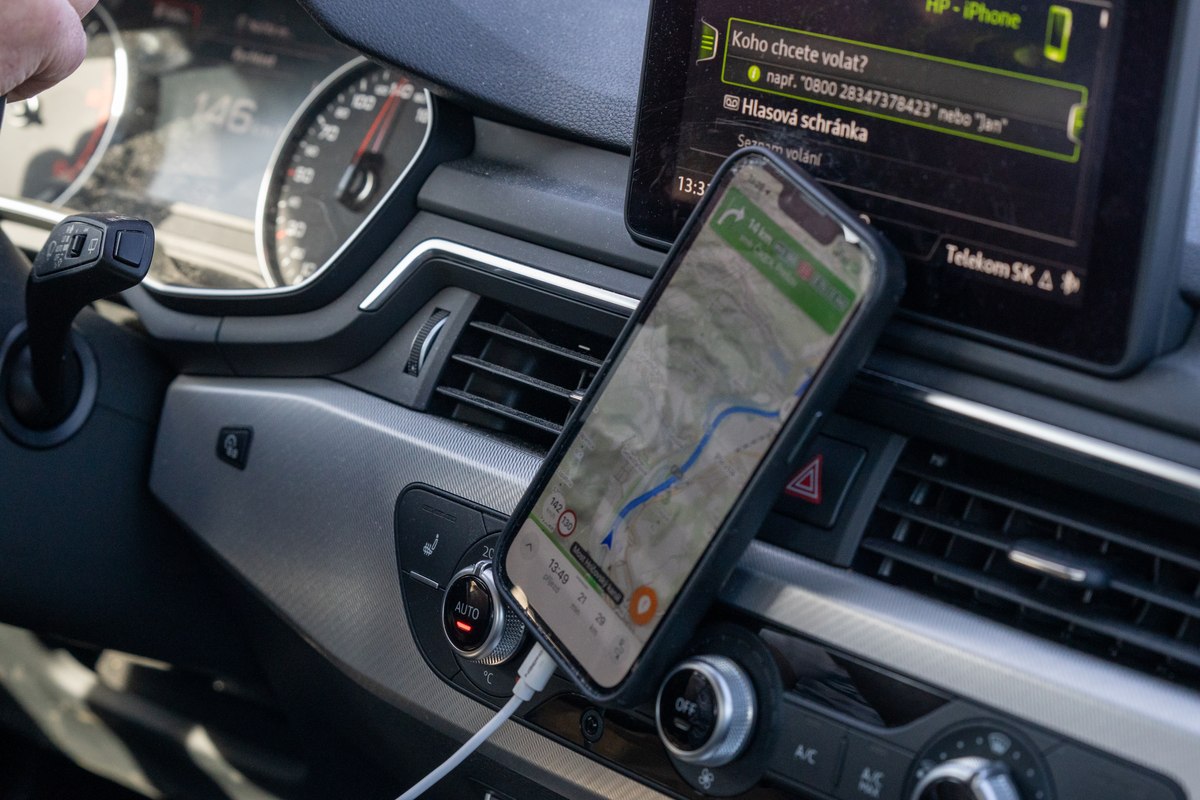
Using a handheld phone while driving — held in the hand, between ear and shoulder, or operated without a hands-free system — carries CZK 2,500–3,500 on-the-spot or CZK 4,000–10,000 in proceedings, plus four penalty points. Failure to wear a seatbelt carries a similar financial penalty. Both are actively enforced at checkpoints that regularly target foreign vehicles.
No Entry and Improper Parking
Violating a no-entry sign carries an on-the-spot fine of up to CZK 2,000 and 0–2 points depending on severity. Improper parking draws the same fine range, and police or municipal authorities may additionally tow the vehicle or deploy a wheel clamp. While these are less serious offences financially, a clamp or tow in an unfamiliar city can cause significant practical delays. Source: Czech Road Traffic Act No. 361/2000.
Mandatory Vehicle Equipment
Czech law requires all drivers to carry specific equipment when you drive in the Czech Republic. Driving without it is a finable offence that catches many foreign drivers off guard. Required items for all vehicles up to 3.5t:
- First aid kit — must be present and accessible
- Warning triangle — must be deployed at breakdowns and accidents
- High-visibility vest — mandatory when exiting the vehicle on a road
- Green insurance card (zelená karta) — international proof of insurance; officers at checkpoints may ask for it
- Daytime running lights — unlike in Germany, headlights must be on at all times including in daylight and good weather
- Child seat — required for children under 150 cm in height and under 36 kg
- Winter tyres — required 1 November to 31 March when conditions demand them; driving without appropriate equipment carries CZK 1,500–2,500 on-the-spot
No valid vignette
Driving on Czech motorways without a valid e-vignette is an offence enforced through a fully digital ANPR system that checks each vehicle’s licence plate against the official database.
If no valid vignette is registered, a CZK 5,000 fine can be issued on the spot by police or customs officers. The penalty can reach CZK 20,000 if the case is not settled straight away and escalates to administrative proceedings. A separate, more serious offence applies to intentional misuse of exemptions: registering a vehicle as exempt without legal entitlement can result in a penalty of up to CZK 100,000 under Act No. 13/1997 Coll., which is different to standard, non-payment cases such as an expired vignette or incorrect licence plate entry.
List of Czech Vignette Fines in 2026 Check the validity of your vignette Buy a Vignette Online
The Czech Points System: What Foreign Drivers Need to Know
The Czech points system has been in operation since 2006 and applies to all drivers on Czech roads, including foreign nationals. The maximum is 12 points. Reaching 12 triggers an automatic loss of driving privileges in Czech Republic, followed by a mandatory ban of at least one year. After the ban expires, the driver must pass a full proficiency re-test — including a driving examination and medical assessment — before driving is permitted again. If a driver completes 12 consecutive months without a recorded offence, four points are deducted.
For foreign drivers, the common misconception is that Czech points do not count. In practice, Czech authorities maintain a separate register for non-resident drivers. Accumulating 12 points results in a Czech driving ban regardless of home country. The points are not transferred to German, Polish, or other home-country licence databases — but the Czech ban is real, enforced at the border, and violating it carries criminal consequences.
Who Is Liable When a Camera Catches the Offence?
This matters especially for rental car users and company car drivers. When a speed camera, red-light camera, or ANPR system captures a violation but cannot identify the driver — the normal situation for automated enforcement — Czech law places liability on the registered operator of the vehicle: the person named on the registration certificate. The fine goes to the vehicle owner, even if they were not driving.
For rental vehicles, the rental company receives the notice and passes the charge to the driver, typically with an administrative surcharge. For company vehicles, the employer may be issued the fine and bill it back. If you sell a vehicle but it remains registered in your name, you remain liable for any offences captured during that period — which is why prompt transfer of registration after a sale matters.
The practical consequence: do not assume a camera fine disappears because you were not personally identified. If the vehicle is registered in an EU country, the notice will be sent to the registered owner’s address in their own language.
How Long Does a Fine Take to Arrive — and Can You Contest It?
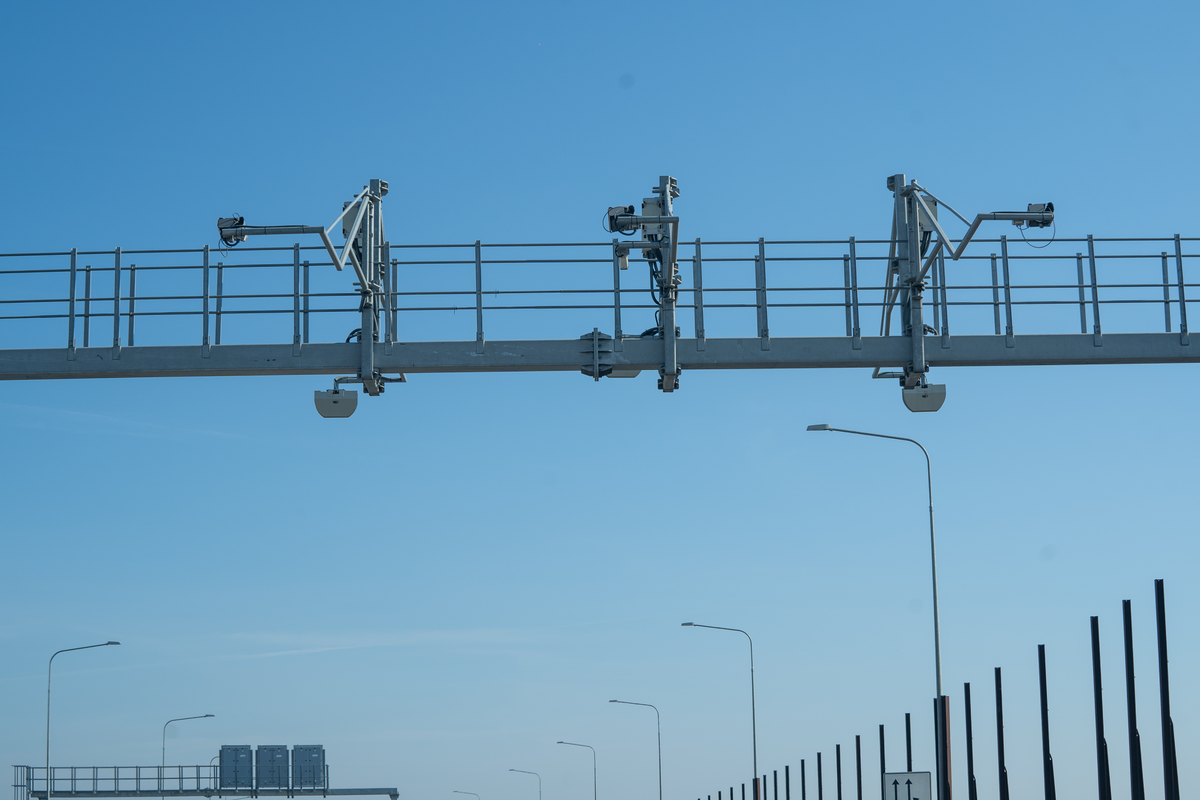
Czech authorities must deal with offences without undue delay. Radar and speed camera fines typically arrive by post within 30 to 60 days of the offence. On-the-spot fines are due immediately. Administrative proceedings can drag on for several months. Czech traffic offences carry a one-year statute of limitations — if no valid notice has been issued within twelve months of the offence date, the case is typically time-barred. The clock runs from the offence date, not your return home.
One important nuance: failing to collect a letter from a post office does not avoid the fine. After a set period, undelivered official mail is deemed legally delivered, and enforcement can proceed as though the letter had been received.
If you believe a fine has been issued incorrectly, you can refuse to pay the officer on-the-spot, escalating the matter to administrative proceedings. There you can present evidence, suggest witnesses, or challenge the accuracy of the measuring equipment. Be aware: administrative proceedings can result in a higher penalty if the offence is upheld. If the situation is complex, consulting a lawyer with Czech traffic law expertise before deciding whether to contest is advisable.
Do Czech Traffic Fines Follow You Home?
For EU member state drivers, yes. EU Directive 2015/413 allows Czech authorities to query vehicle registration databases across EU member states, identify the registered owner, and send a payment notice to their home address in their own language. The directive covers speeding, running red lights, drink driving, seatbelt violations, mobile phone use while driving, and failure to pay road tolls. Unpaid fines are passed to collection agencies operating across EU borders.
For UK drivers post-Brexit, the UK is no longer covered by Directive 2015/413, making enforcement of camera-detected fines against UK-registered vehicles significantly more limited. UK drivers stopped in person by police remain fully liable for on-the-spot payment. The situation continues to evolve.
For more detail on cross-border enforcement specifically for vignette fines, including a country-by-country risk table, see our vignette fine guide.
Czech Vignette Fine 2026: Cross-border enforcement explained
CzechVignette.cz is a private vignette reseller and is not affiliated with the Czech toll authority (SFDI) or the edalnice.gov.cz official system. Fine amounts and enforcement rules are subject to change — always verify current figures against official sources before travel.
FAQ
What are common traffic violations and their penalties in Czechia for foreign drivers?
Common traffic offences in the Czech Republic include speeding, driving without a valid motorway vignette, illegal parking, using a mobile phone while driving, failing to wear a seat belt or helmet, illegal overtaking and drink-driving. Penalities can include on-the-spot fines, penalty points, driving bans or administrative proceedings depending on the severity of the offence. The Czech Republic uses a penalty points system, where drivers start with 0 points and can lose their licence at 12 points. For example. Using a mobile phone while driving carries 2 points and running a red light is in the 6-point category.
How to pay a traffic fine received in the Czech Republic from abroad?
Most Czech traffic fines can be paid online or by international bank transfer using the payment details listed on the notice. Always follow the instructions provided by the issuing authority and include the correct details, like the reference number, when paying.
How to check if I have unpaid traffic fines in the Czech Republic online?
There is not any specific public database/ platform that allows people to check all Czech traffic fines online. Some traffic-related records and penalty points are accessible through the Czech Transport Portal (Portál dopravy) and Citizen Portal (Portál občana). However, access to these services requires a Czech digital identity (Identita občana), such as Bankovní identita (via a Czech bank) or a Datová schránka (data box). Without one of these authentication methods, foreign drivers generally cannot log in and verify fines online. As most fines are managed directly by the authority that issued them, they may not appear in a central system. For verification, drivers often need to wait for an official paper notification or contact the relevant municipal authority, police department, or enforcement body listed on the notice.It’s also possible to request information from the Czech Customs Administration (Celní správa ČR). This can be done in person through a customs patrol while in the Czech Republic or remotely via email or the cPortál platform. Please note that responses to such requests may take some time.Official resources: Portál dopravy and Portál občana..
Where can I find an English-speaking legal advisor for Czech traffic law?
English-speaking legal advisors can be found through Czech Bar Association directories, expat legal services or international law firms operating in Prague and other major cities. When choosing legal assistance, look for lawyers experienced in traffic law, administrative offences and cross-border driver cases.
Are there companies that assist foreigners with Czech traffic fine disputes?
Yes. Some legal consultancies and specialist traffic-law firms assist foreign drivers with translation, appeals, administrative communication and fine disputes in the Czech Republic. Always verify that the provider is legitimate and experienced in Czech road traffic law before sharing personal documents or payment information.
Steps to dispute a speeding ticket issued in the Czech Republic.
Speeding tickets in the Czech Republic can be either accepted on the spot or handled through administrative proceedings if you choose to dispute them. To challenge a ticket, you should first check the notice carefully and identify the issuing authority (Czech Police or a municipal office). Any formal objection must be submitted in writing within the deadline stated on the notice. In many cases, the objection period is 15 days from the date the notice is delivered.Keep in mind that for fines issued by automated speed cameras, Czech law generally holds the registered vehicle owner responsible. Simply stating that someone else was driving is usually not enough to cancel the fine.To support your case, include any relevant evidence, such as documents, GPS records, or information that may help prove an error. Official correspondence with Czech authorities is generally expected to be submitted in Czech Language. The authority will then review the case under Czech administrative procedure rules and issue a formal decision.
What is the most common traffic fine in Czech Republic for foreign drivers?
The vignette fine (CZK 5,000 on-the-spot) is the most frequently encountered by foreign drivers, followed by speeding. Both are heavily enforced via ANPR cameras and mobile radar units. For full vignette fine detail see: /en/czech-vignette-fine/.
How much is a speeding fine in the Czech Republic?
Fines range from CZK 1,500–2,000 (about €62–82) for minor excess of up to 10 km/h over the limit to CZK 7,000–25,000 (about €287–1,025) for the most serious speeding offences. Exceeding the speed limit by 20 km/h in a built-up area or 30 km/h outside a built-up area carries CZK 2,500–3,500 (about €103–144) on the spot or CZK 4,000–10,000 (about €164–410) in administrative proceedings, plus 4 penalty points. More serious speeding — 40 km/h or more in a built-up area, or 50 km/h or more outside a built-up area — carries CZK 7,000–25,000 (about €287–1,025), 6 penalty points, and a driving ban of 6 to 18 months. Source: BESIP, mv.gov.cz.
What is the alcohol limit in Czech Republic?
Zero. The Czech Republic enforces a 0.0 per mille limit for all drivers. Any detectable alcohol is a misdemeanour. Above 1.0 per mille it becomes a criminal offence with potential prison sentence. Refusing a breathalyser test draws the maximum penalty.
Do Czech penalty points affect my home country driving licence?
Czech penalty points are not transferred to home-country licence databases in Germany, Poland, Austria, or elsewhere. However, Czech authorities maintain a separate register for foreign drivers, and accumulating 12 points results in a Czech driving ban that is enforced at the border.
How do I pay a traffic fine in Czech Republic?
On-the-spot fines are paid directly to the officer by card (Visa or Mastercard) or cash — always request a receipt. Camera-detected fines sent by post are paid by bank transfer. Uncollected post is deemed legally delivered after a set period; ignoring a letter does not make a fine disappear. Czech traffic offences carry a one-year statute of limitations.
Written by: Mattijs Wijnmalen CEO and co-founder of CzechVignette.cz. Mattijs has over 10 years' experience in European road tolling. He researched and wrote this article following personal field trips in February and March 2026, driving the D1, D8/A17, and Prague–Dresden routes himself. All photography is by Ujjawal Verma, taken on the same trips.
Fact-checked by: Freek Jurg, COO and co-founder of CzechVignette.cz, with over 10 years' experience in European tolling operations.

Mattijs Wijnmalen
Lead travel authority and road expert