

Driving In The Czech Republic: Complete Guide To Vehicle Requirements in 2026
Intro
Driving in the Czech Republic comes with a clear set of rules, and some of them are stricter than many visitors expect. From the documents you must carry to mandatory vehicle equipment in your car, there are a few non-negotiables you need to get right before you cross the border.
This guide breaks down everything you need to know: what to bring, which road rules tend to catch drivers out (including the strict zero alcohol limit and condition-based winter tyre law), and whether your vehicle needs a Czech motorway vignette. It applies to passenger cars under 3.5 tonnes.
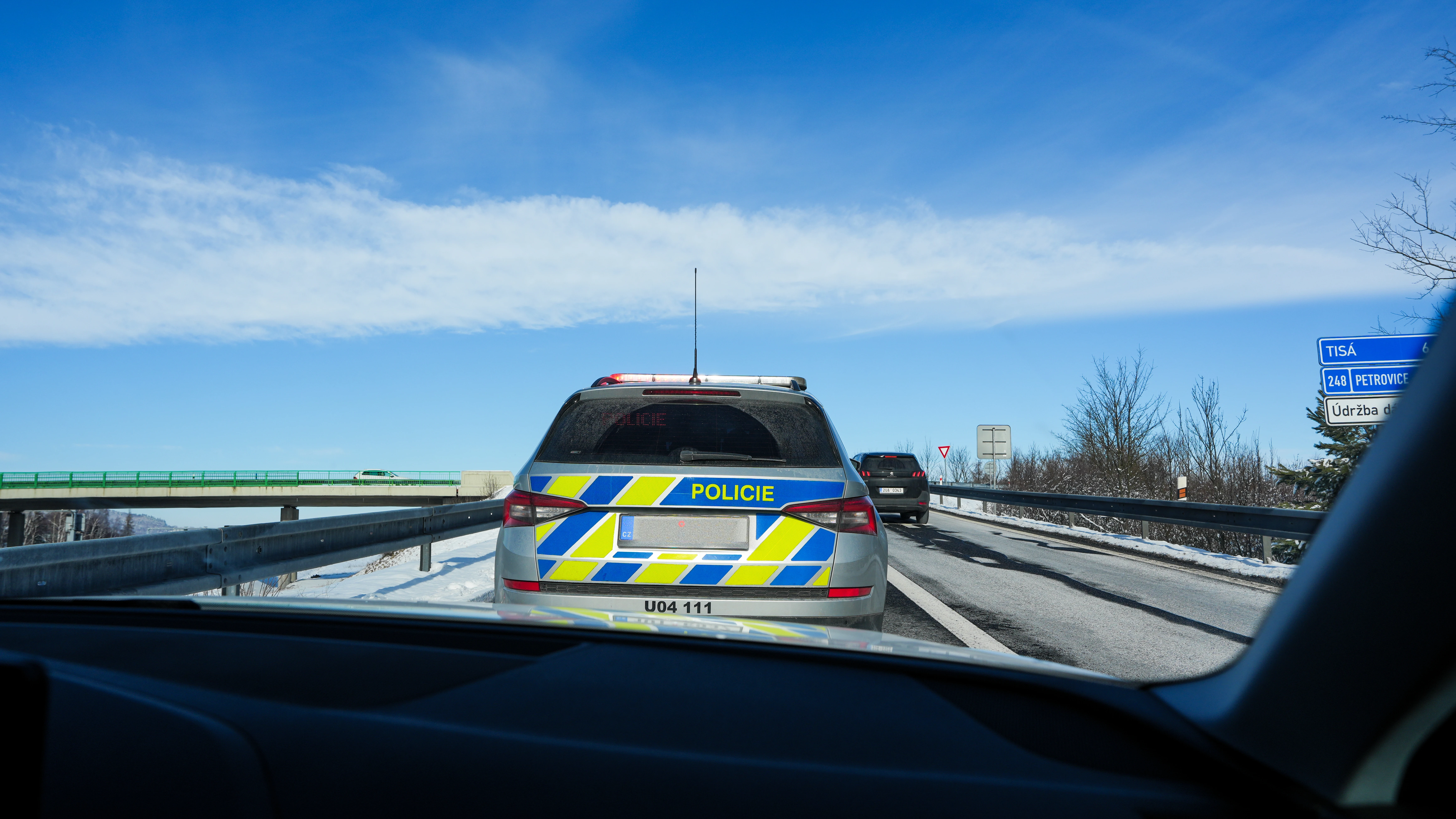
Before our team drove from Vienna to Prague via the D1 in February 2026, we stopped at a service station just inside the Czech border to double-check everything — documents, equipment, the works. It turned out to be time well spent. About an hour later, we ran into a roadside police check, and having everything in order made the stop quick and uneventful.
Everything in this guide is based on what we have seen first-hand on Czech roads and border crossings, updated for 2026.
Before you cross the border — 5 things you must have
At a glance: the non-negotiables
- 1. A valid driving licence
- 2. Your vehicle registration document (V5C for UK drivers)
- 3. Proof of insurance (a Green Card is strongly recommended)
- 4. A warning triangle, reflective jacket, and first aid kit
- 5. A valid Czech e-vignette (if you plan to use motorways or expressways)
These are not "nice to have" items. They are the basics Czech police will expect you to produce during a roadside stop.
Documents You Must Carry When Driving in the Czech Republic
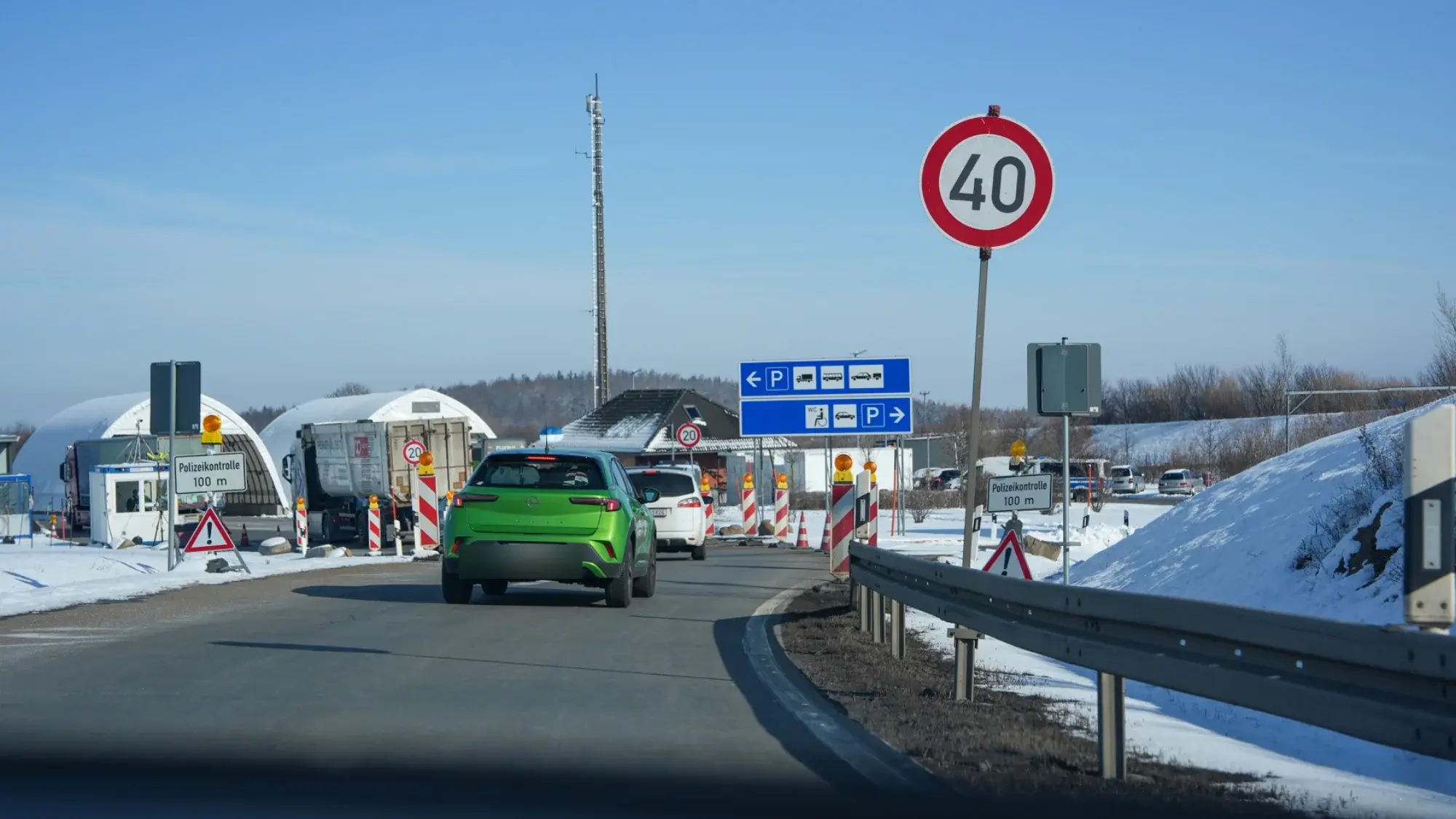
Czech law requires drivers to carry specific documents at all times and present them on request. While checks are selective rather than constant, they are common on major routes and near border crossings. Our team observed this directly near the Petrovice–Breitenau border crossing on the D8/A17 route, where vehicles were being pulled over and passports examined alongside standard driving documents.
It is also worth noting that German federal police currently carry out border controls on the German side of this crossing, which can lead to significant delays in both directions. During our February 2026 trip, our photographer captured the queuing and checkpoint infrastructure at Petrovice–Breitenau. Check out the images below.
What you need
- Valid driving licence — A full licence is required, with a minimum driving age of 18. UK drivers: your photocard licence is accepted in the Czech Republic, and an International Driving Permit is not required.
- Passport or national ID — EU and EEA nationals can use their national identity card. UK nationals must carry a valid passport.
- Vehicle registration document — UK drivers should carry the V5C logbook. If your vehicle has recently been purchased and you only have the new-keeper slip, bring that. If you're driving a hire or company car, carry either the hire agreement or a signed letter of authorisation from the registered owner.
- Proof of insurance — Your motor insurance certificate must cover driving in the Czech Republic. A Green Card (International Motor Insurance Certificate) is not legally required under current rules, but it is strongly recommended. It provides clear, recognised proof of cover at border checks or in the event of an accident, and Czech traffic police are familiar with it.
- ETIAS authorisation — The EU's travel authorisation system for non-EU nationals visiting the Schengen Area has not yet launched as of April 2026. Once introduced, UK, US, and other non-Schengen passport holders will need ETIAS for entry.
Documents checklist
- Valid driving licence
- Passport / national ID
- Vehicle registration document (V5C / hire agreement)
- Insurance proof / Green Card
- ETIAS authorisation (check launch date at etias.eu )
- Czech e-vignette (if using motorways or expressways)
Mandatory Vehicle Equipment: What You Must Have in the Car
Czech law — specifically Decree No. 341/2014 Coll. and Act No. 361/2000 Coll. — sets out specific equipment requirements for all motor vehicles using Czech roads. These rules apply equally to foreign-registered vehicles.
| Equipment | Required? | Notes | |
|---|---|---|---|
| Warning triangle | Yes | Must be placed at least 50m behind the vehicle on a standard road, 100m on a motorway | |
| Reflective jacket | Yes | Keep this in the cabin, not the boot, so you can put it on before getting out of the vehicle | |
| First aid kit | Yes | DIN 13164 compliant; must be kept in the cabin and reachable, not packed under luggage in the boot | |
| Spare bulbs & fuses | Yes | Required unless your lights are LED or xenon and cannot be replaced on the roadside | |
| Headlamp beam deflectors | Yes — UK/IE only | Required for right-hand-drive vehicles (UK and Irish cars) to avoid dazzling oncoming traffic | |
| Fire extinguisher | No — but worth having | Not a legal requirement for foreign-registered cars, but sensible on longer trips | |
| Spare wheel / repair kit | Depends | Carry one if your vehicle doesn't have run-flat tyres |
First aid kit placement: This must be kept inside the cabin and be immediately accessible—not buried under your luggage in the boot. Czech police check this during roadside inspections. The kit must meet the DIN 13164 standard.
Reflective jacket: Same rule applies. Keep it in the cabin, not the boot. If you need to get out of the car at the side of a motorway, you must be able to put it on before stepping out. This applies within built-up areas too.
UK and Irish drivers — headlamp deflectors: Right-hand-drive vehicles have headlamps angled to illuminate the left-hand kerb, which means they dazzle oncoming drivers on the Continent. Deflector stickers are cheap, widely available, and required by law.
Travelling with children? Any child under 150 cm in height OR under 36 kg in weight must use an approved child seat, regardless of which seat they occupy in the vehicle. Source: Czech Road Traffic Act, Section 6.
Czech Road Rules: Speed, Alcohol & Winter Tyres
Speed limits
| Road type | Passenger cars |
|---|---|
| Built-up areas | 50 km/h |
| Single carriageways | 90 km/h |
| Expressways | 110 km/h |
| Motorways | 130 km/h |
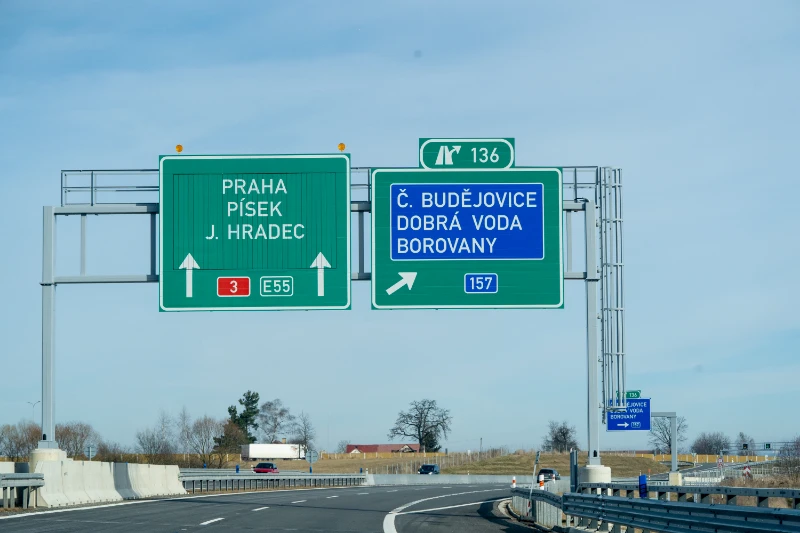
During our 20 February 2026 journey from Prague toward Dresden, we observed active enforcement gantries along the D8 and D1 corridors. Enforcement is consistent, so always assume the limits are being monitored. For the full breakdown—including temporary limits, roadworks zones, and towing rules—see our speed limits in the Czech Republic guide.
150 km/h pilot scheme — D3 motorway (active since October 2025)
A 47-kilometre pilot section of the D3 motorway between Planá nad Lužnicí (Exit 84) and Úsilné (Exit 131) near České Budějovice has been operating with a variable speed limit of up to 150 km/h since 5 October 2025. The higher limit only applies when electronic roadside signs explicitly display it and conditions are suitable (dry road, good visibility, smooth traffic flow, no roadworks). At all other times, the default limit of 130 km/h applies. This pilot scheme is the first of its kind in the EU. Source: Radio Prague International / Czech Ministry of Transport.
Czech Ministry of Transport pilot announcementSeatbelts
Seatbelts are mandatory for the driver and all passengers in every seat. This is strictly enforced and always checked at roadside stops.
Alcohol: zero tolerance
Winter tyres
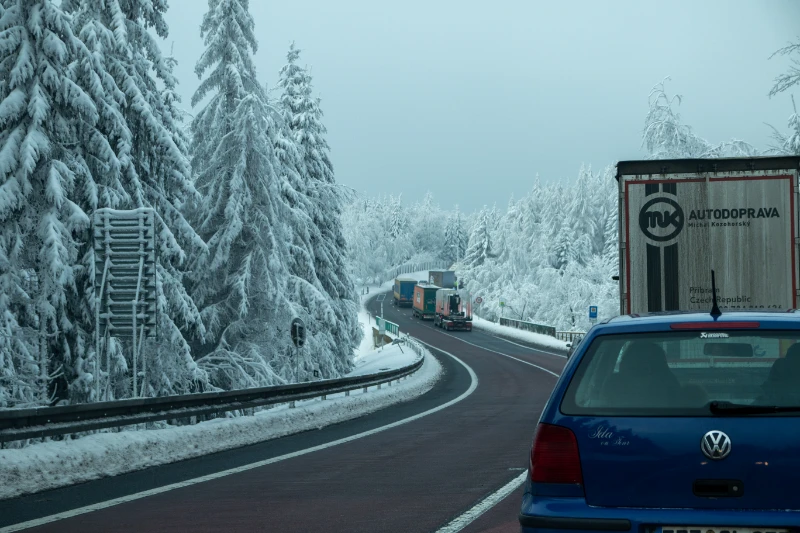
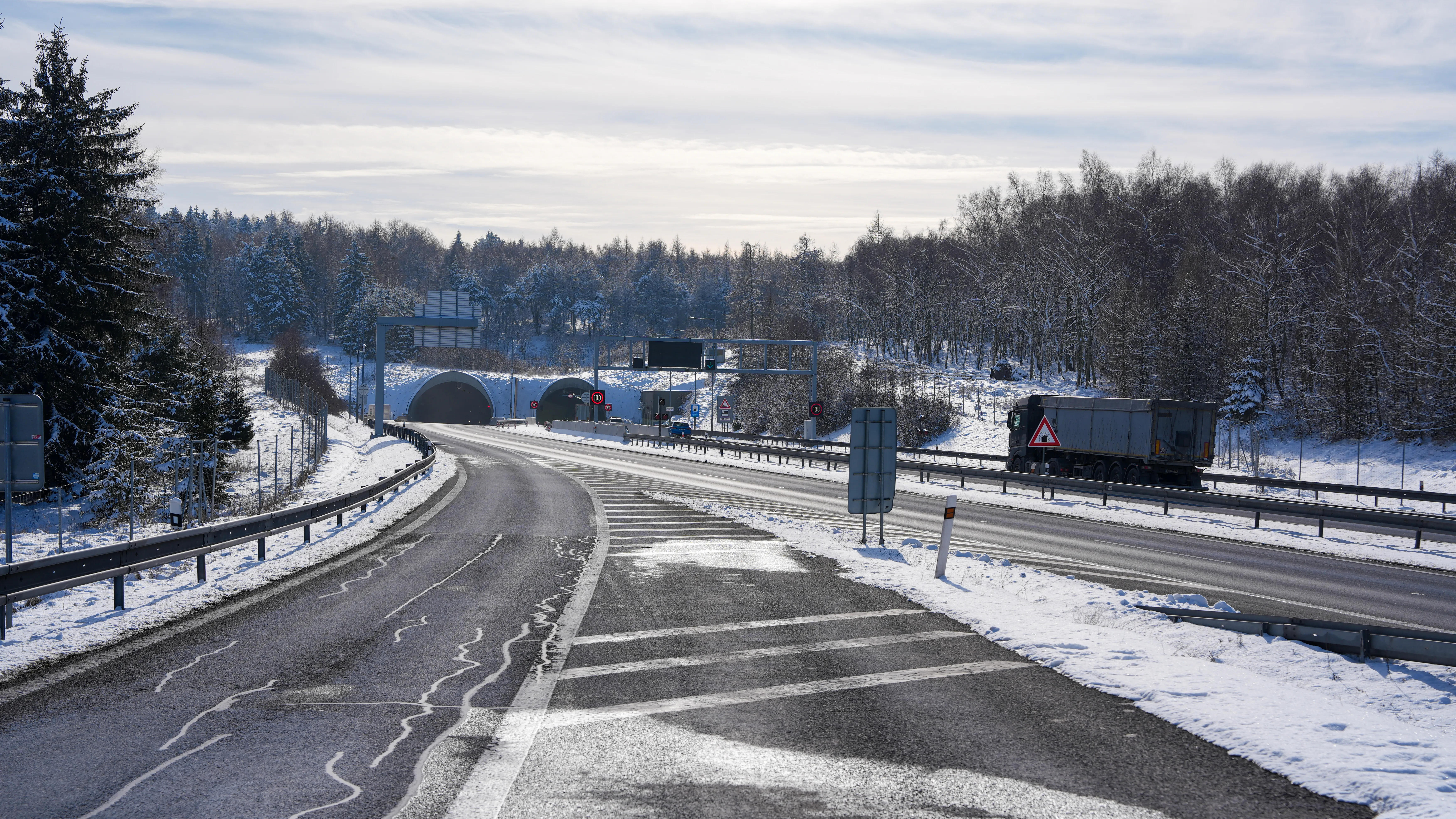
When it comes to winter tyres, the Czech Republic applies a condition-based rule, not a date-based one. Winter tyres are legally required whenever wintry road conditions exist. That means when snow, ice, or frost is present on the road, when temperatures drop below 4°C, or when road signs indicate their use.
BESIP recommends using winter tyres between 1 November and 31 March as a practical guideline, but the legal trigger is conditions, not the calendar. On our 20 February 2026 trip from Prague toward Dresden, heavy snow across the border stretch made winter tyres non-negotiable.
Tyre markings: tyres must carry the M+S, M.S., or M&S designation with a minimum tread depth of 4 mm for passenger cars. All-season tyres marked M+S are accepted. Snow chains are permitted on snow-covered roads. However, studded/spiked tyres are banned outright.
Failure to comply can result in a fine of about CZK 2,000 (~€80). If you’re involved in an accident without proper tyres in wintry conditions, the police will treat that as an aggravating factor.
Headlights
Dipped headlights are compulsory at all times in the Czech Republic—day and night, all year round. This rule applies regardless of weather or visibility, so don’t rely on daytime running lights alone. From what we’ve seen on the ground, enforcement is consistent. Monitoring gantries are active across the D5, D8, and D1 routes, and ANPR systems are in use. In short: always assume this is being checked, even if you don’t see a police car.
Mobile phones
Using a handheld mobile phone while driving is banned. Hands-free use is permitted, but anything that requires you to hold or actively operate your phone while driving will land you in trouble. If you need to check directions or messages, pull over safely at a rest stop.
Priority at intersections
Unless signage indicates otherwise, you must give priority to vehicles approaching from the right at intersections. This catches a lot of foreign drivers out, especially if you’re used to different right-of-way rules. When in doubt, slow down and check. Also note that trams and buses have priority when merging from dedicated lanes. When driving abroad, stay alert and be prepared to slow or stop for others.
Parking
Parking rules are straightforward once you know what to look for. On two-way roads, park on the right-hand side, parallel to the kerb. A solid yellow line means parking is forbidden; a dotted yellow line means parking restrictions apply. Do not park within 5 metres of an intersection, on crossings, on bridges, or within 30 metres of a tram stop. Enforcement of these rules is active, particularly in urban areas. Fines and towing are both possibilities.
Horn
Your horn should only be used when an audible warning is needed to prevent an accident. In central Prague, horn use is prohibited between 21:00 and 05:00 (summer) and 21:00 and 05:00 (year-round in residential zones).
Overtaking cyclists
Czech law is very clear on overtaking cyclists. You must leave lateral clearance of at least 1.5m when overtaking a cyclist. On roads with a 30 km/h limit, the minimum is 1m. This is not a guideline. It’s a fixed legal requirement. If there isn’t enough space, you must wait before overtaking.
Emergency corridor
On multi-lane roads, drivers are required to form an emergency corridor as soon as traffic slows or stops—not when emergency services vehicles appear. The corridor always forms between the leftmost lane and all other lanes: left-lane drivers move left, everyone else moves right. This creates a clear path down the middle for emergency services. It applies regardless of how many lanes there are, and it’s taken very seriously
Radar detectors and dashcams
Radar warning devices are banned in the Czech Republic. Even having one in your vehicle is considered an offence, whether or not you’re actively using it. Dashcams, on the other hand, are allowed. Just be mindful of privacy rules. Czech law doesn’t specify a retention period, but under GDPR, you should delete footage when it’s no longer needed—typically once you're satisfied no incident occurred. Do not publish footage showing identifiable people or licence plates without consent.
Accidents and breakdowns
If you’re involved in an accident, what you do next depends on the severity. You must call the police immediately if there is personal injury or death, or if property damage exceeds CZK 200,000 (raised from CZK 100,000 in July 2025). In these cases, a private exchange of details is not sufficient.
For smaller incidents where the damage is below CZK 200,000, if both parties agree on fault and no third-party property is damaged, you can settle the matter without police. Use the European Accident Record form, which is available from the Czech Insurers' Bureau and most insurance providers.
Important — pre-existing vehicle damage
This is something many drivers don’t realise. If your vehicle has visible body damage, you may not be allowed to leave the Czech Republic without police-issued damage confirmation. If you arrive with pre-existing damage to your car, have it noted at the border or at the scene of any incident before attempting to drive out of the country. Skipping this step can cause complications when exiting the country. Source: ADAC / Czech Police.
Does My Vehicle Need a Czech Motorway Vignette?
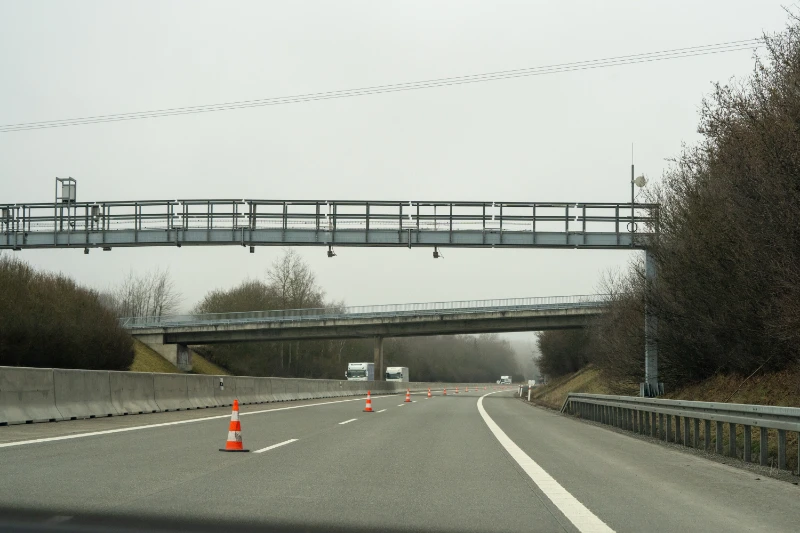
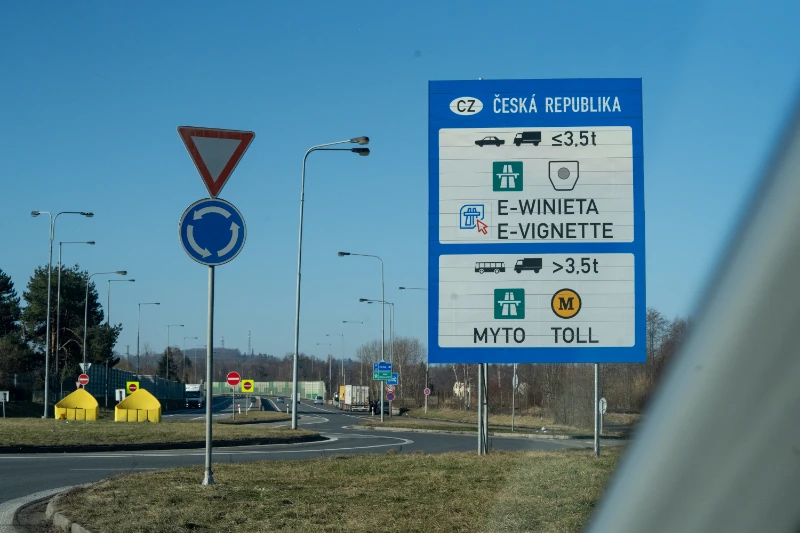
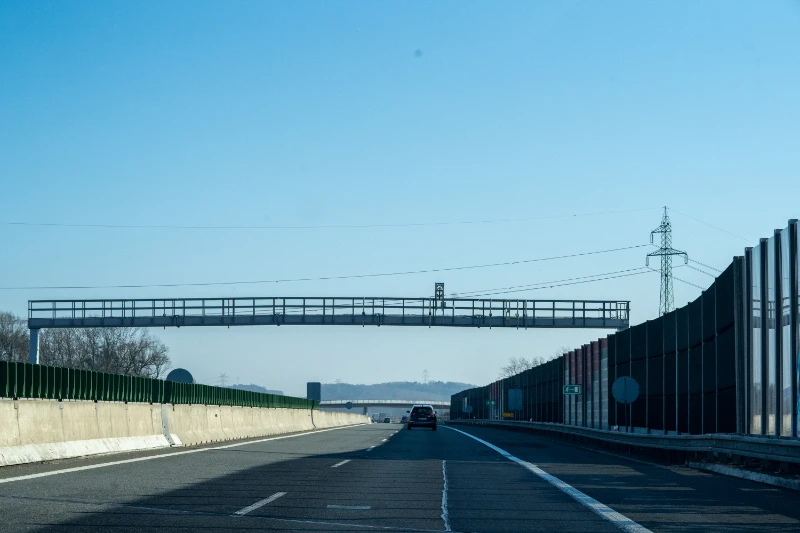
All passenger cars under 3.5 tonnes using Czech motorways (dálnice) or expressways (silnice pro motorová vozidla) must hold a valid e-vignette. The Czech Republic moved to a fully digital system in 2021, which means there is no physical sticker to display. Your vignette is registered to your vehicle's licence plate in the edalnice.gov.cz system and checked automatically by ANPR cameras mounted on overhead gantries as you travel.
Our team observed active gantries on the D5, D8, D1, and D2 during our February and March 2026 trips. Coverage is thorough and enforcement is completely automated.
Exemptions apply to motorcycles, electric vehicles, and vehicles over 3.5 tonnes, which fall under separate rules. See our full Czech vignette exemptions guide.[1]
Buying your vignette online before your trip is the easiest option. It means no queuing at a petrol station near the border and no risk of joining the motorway without valid cover.
Before your trip, you can purchase your Czech e-vignette and verify it's active with our custom Czech vignette validity checker.[2] This gives you peace of mind that everything is active and correctly registered.
Disclosure
CzechVignette.cz is a third-party reseller, not the Czech Road Directorate (ŘSD). A service fee applies. Vignettes can also be purchased directly and without a service fee at edalnice.gov.cz.