

Lead travel authority and road expert

In this article
Speed Limits in Czech Republic 2026: Motorways, Towns & Roads
Driving in the Czech Republic is straightforward once you know the national speed rules. Limits are posted in kilometres per hour (km/h) and vary depending on whether you are driving on motorways, expressways, rural roads or inside built-up areas.
Speed limits are strictly enforced with cameras and police checks across the country, so it's important to stay alert and stick to the limits at all times.
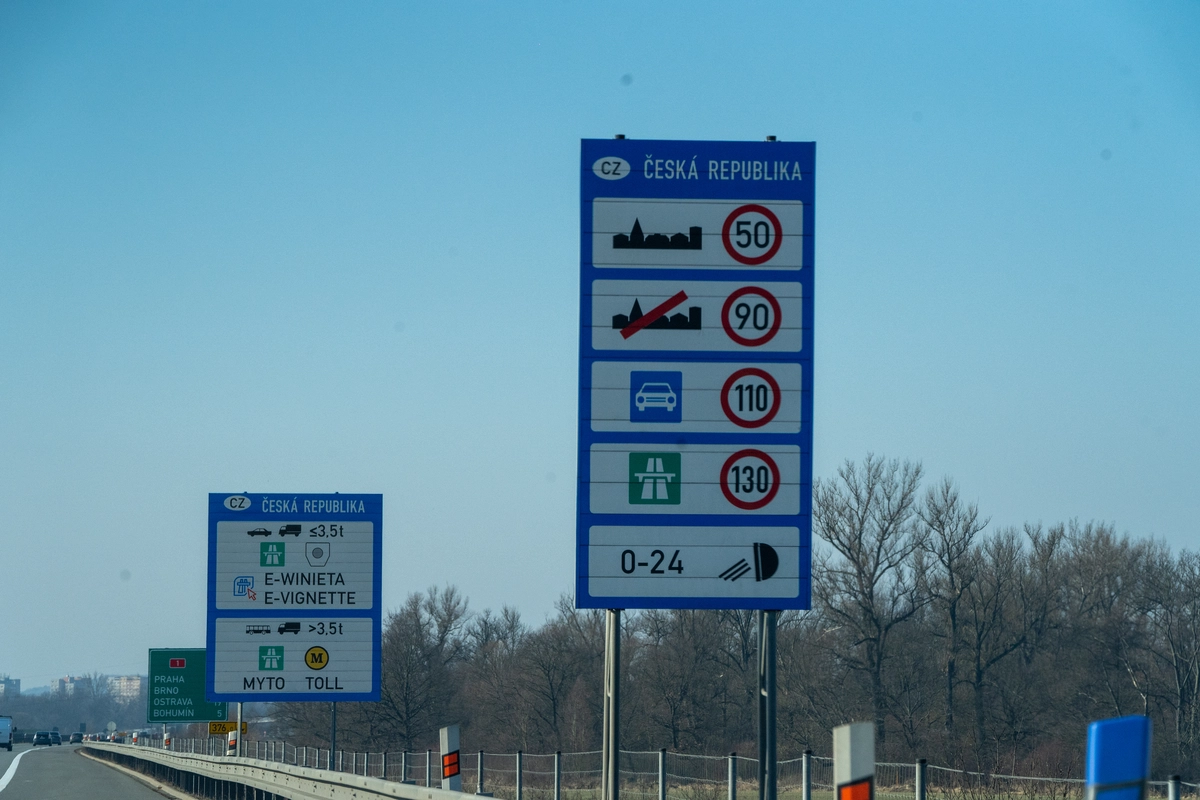
Czech Speed Limits by Road Type (2026)
The standard Czech Republic speed limit rules apply nationwide unless road signs show otherwise. Always follow posted road signs where they differ from national limits, as these override standard rules.
For most visitors driving passenger cars under 3.5 tonnes, the rules are simple: the Czech motorway speed limit is 130 km/h, rural roads are generally 90 km/h and urban areas default to 50 km/h.
If you're checking the current speed limit in Czechia before a road trip, the table below gives the standard nationwide limits for 2026 with speed limits shown in kilometres per hour (km/h). Lower limits apply to trucks, buses and vehicles towing trailers compared with standard passenger cars, particularly near villages, tunnels and motorway roadworks.
| Road type | Cars ≤3.5t & buses | Trucks >3.5t / towing | Notes |
|---|---|---|---|
| Motorways (Dálnice) | 130 km/h | 80 km/h | 150 km/h on the signed D3 pilot section — see below |
| Expressways (silnice pro motorová vozidla) | 110 km/h | 80 km/h | Blue car-symbol sign; no longer an “R” class since 2016 |
| Outside towns & villages | 90 km/h | 80 km/h | — |
| Inside towns & cities | 50 km/h | 50 km/h | 30 km/h zones where signed |
| Motorway/expressway inside a town | 80 km/h | 80 km/h | Applies where a motorway runs through a built-up area |
| Residential zone (obytná zóna) | 20 km/h | 20 km/h | Only in signed zones |
Since 1 October 2025, the Czech Republic has run a pilot allowing up to 150 km/h on one signed motorway section — the D3 between Planá nad Lužnicí (Tábor) and Úsilné (České Budějovice), km 84–131. Variable electronic signs set the limit dynamically at 100, 130 or 150 km/h depending on conditions, and 150 applies only when visibility, weather and traffic are ideal. The pilot has been extended to the end of 2026; everywhere else on the motorway network the maximum stays 130 km/h.
Temporary speed limits are common in motorway roadworks and can be significantly lower than standard limits, often enforced with average speed cameras.
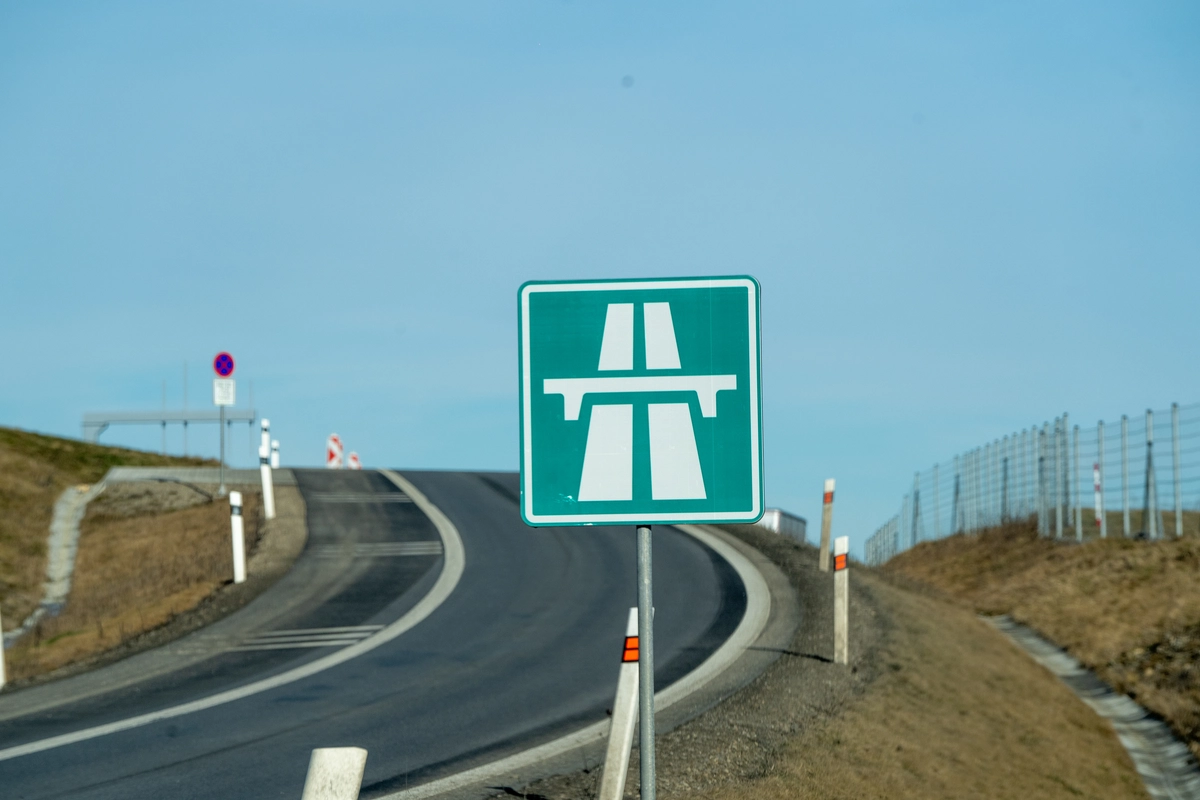
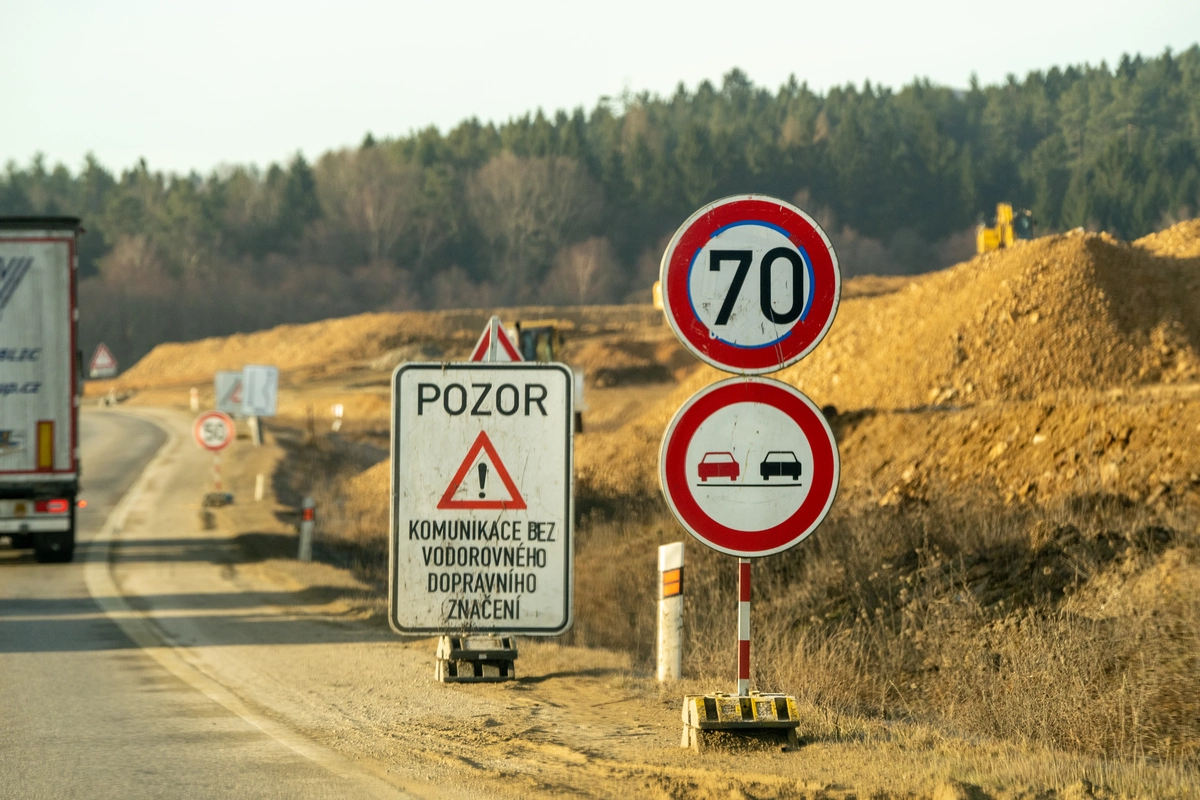
Speed Cameras & Enforcement in Czech Republic
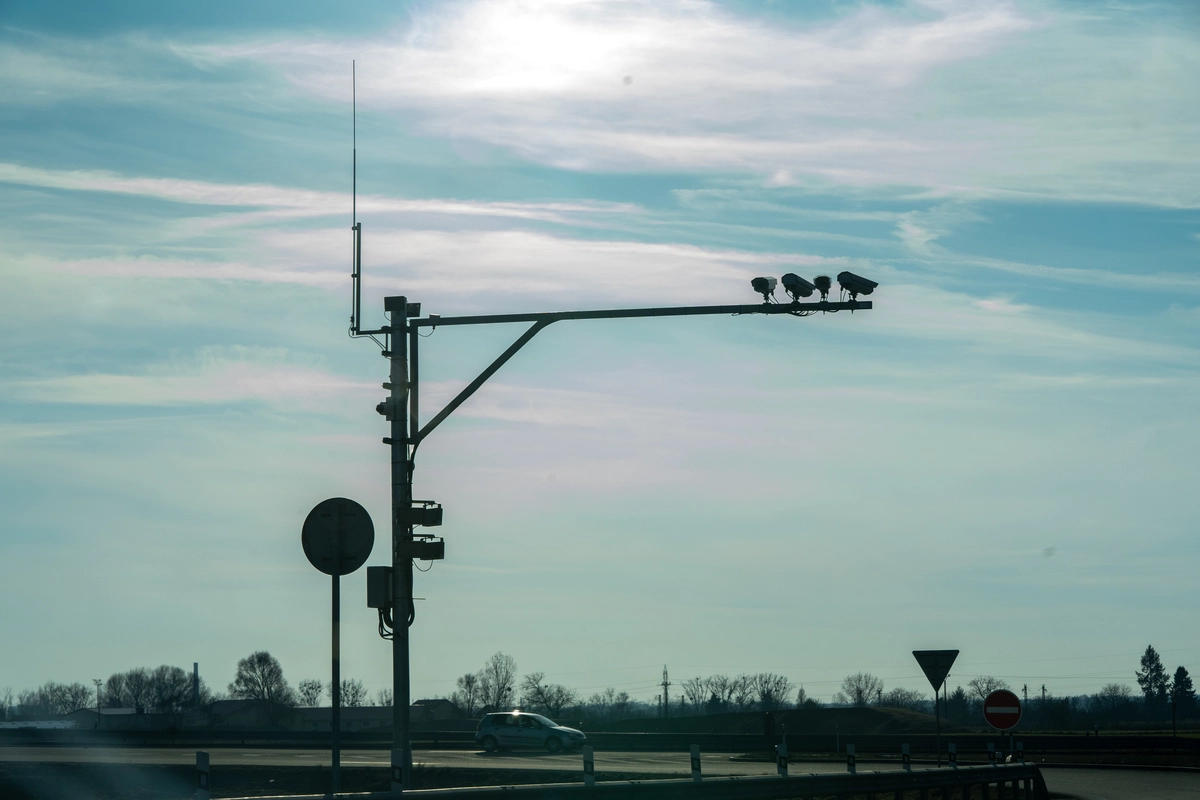
Speed enforcement in the Czech Republic is a mix of fixed cameras and regular police checks, so it's worth expecting both when driving on main roads and in towns.
On motorways and major routes, fixed ANPR systems and speed cameras are commonly used to monitor traffic, especially on busy international corridors and the main highway Czech Republic network. Even small speeding violations can result in fines, especially in urban areas or controlled motorway sections.
Mobile police checks are also very common and can appear without much warning. You'll often see them near schools, town entrances, junctions and accident-prone stretches where speed restrictions are enforced more strictly. It's not unusual for drivers to come across temporary roadside checks rather than permanent camera setups.
On sections of the D1 motorway near Prague, variable speed signs are used, meaning limits can change depending on traffic, weather or incidents.
Enforcement is generally consistent, so it's best not to rely on “safe gaps” between cameras. During field research, we encountered active mobile checks on D2 near Brno, where foreign-registered vehicles were treated the same as local ones. Czech police can issue on-the-spot fines, including to foreign drivers, and payment may sometimes be required immediately.
Speeding Fines in Czech Republic: What Foreign Drivers Need to Know
Speeding fines in the Czech Republic depend on how far over the limit you are. Police can issue fines on the spot and foreign drivers may be asked to pay immediately, or leave a deposit. More serious offences can result in higher fines and further penalties. Czech police apply a small technical tolerance before measuring. Typically a few km/h is deducted from the radar reading, but don't rely on it: even a 1 km/h excess can, in principle, be fined.
Based on guidance from BESIP, fines increase the faster you travel over the limit. In more serious cases, penalty points or driving bans can also apply depending on the level of excess speed.
Typical Fine Bands
| Excess over limit (in town | On-the-spot fin | Administrative fine | Penalty points / ban |
|---|---|---|---|
| Up to 10 km/h | up to CZK 1,500 | CZK 2,000–5,000 | No points |
| 10–19 km/h | CZK 1,500–2,000 | CZK 2,000–5,000 | 2 points |
| 20–39 km/h | CZK 2,500–3,500 | CZK 4,000–10,000 | 4 points |
| 40 km/h or more | — (administrative only) | CZK 7,000–25,000 | 6 points + 6–18 month ban possible |
Penalties for speeding in the Czech Republic vary depending on how far over the limit you are. As shown in the table above, lower-level offences can result in on-the-spot fines of up to CZK 3,500, while more serious offences are handled through administrative proceedings. Drivers caught exceeding the limit by 40 km/h or more in urban areas face administrative fines of CZK 7,000–25,000, six penalty points and may receive a driving ban of between 6–18 months.
Penalty points accumulate; 12 points means losing your licence for 12 months. A police ‘technical tolerance’ is deducted before measuring (e.g. a reading of 138 km/h is assessed as ~134). Speeding rules are set out in § 125c of Act 361/2000 Sb, tightened by the 1 January 2024 reform.
According to BESIP (Czech Road Safety Authority, 2026): on-the-spot fines for speeding range from CZK 1,500 to CZK 10,000 depending on the excess. Administrative penalties may be higher.
For more details about speeding fines, drink driving penalties, parking violations and other road offences, see our guide for Traffic fines in the Czech Republic.
Cross-border enforcement is also possible, so fines can still follow drivers back to their home country. We've seen foreign drivers stopped at mobile checkpoints on routes like the D5, where payment was required immediately or a deposit was taken before they were allowed to continue. This means fines can still be enforced, even after you leave the country.
Before using Czech motorways, make sure your e-vignette is active, as it’s required on most motorway routes regardless of the Czech motorway speed limit. Driving without a valid vignette can result in a separate fine. Take a look at our Czech toll roads map and where you need a vignette in 2026 or plan your journey via toll-free roads. Also, you can see our guide for more details about Czech Vignette fines.
You can buy a Czech vignette online in a few minutes via our Czech vignette validity checker before travelling.
Buy Your Czech Vignette Online
Registered directly into the official Czech system — active before you cross the border.
Buy a Vignette OnlineFAQ
What is the speed limit in Czech Republic?
The main speed limits in Czech Republic are 130 km/h on motorways (150 km/h on the signed D3 Tábor–České Budějovice pilot section), 110 km/h on expressways, 90 km/h outside towns, 50 km/h in built-up areas and 20 km/h in residential zones.
What is the speed limit outside towns?
Outside built-up areas, the standard limit is 90 km/h for passenger cars under 3.5t on A-roads and rural routes.
What is the speed limit in Prague?
In Prague and other built-up areas, the general limit is 50 km/h, with some 30 km/h zones near schools and residential streets. Variable speed limits may also apply on motorway sections around the city.
Do speed cameras operate in Czech Republic?
Yes, there are fixed ANPR cameras on motorways and main routes, along with regular mobile police checks on A-roads and in towns. Enforcement is active and foreign-registered vehicles are treated the same as local ones.
What is the speed limit for vehicles over 3.5t?
For vehicles over 3.5t, buses, and those towing trailers, the typical limit is 80 km/h on motorways, expressways and outside towns, and 50 km/h in built-up areas.
Can I use a radar or laser detector?
No. Using or carrying an active radar or laser detector is prohibited in the Czech Republic, and police can fine you and confiscate the device.
Written by Mattijs Wijnmalen, CEO of Czechvignette.cz, from first-hand driving across Czech motorways (December 2025–March 2026). Photos by Ujjwal Verma.
Written by: Mattijs Wijnmalen CEO and co-founder of CzechVignette.cz. Mattijs has over 10 years' experience in European road tolling. He researched and wrote this article following personal field trips in February and March 2026, driving the D1, D8/A17, and Prague–Dresden routes himself. All photography is by Ujjawal Verma, taken on the same trips.
Fact-checked by: Freek Jurg, COO and co-founder of CzechVignette.cz, with over 10 years' experience in European tolling operations.

Mattijs Wijnmalen
Lead travel authority and road expert