

Lead travel authority and road expert

In this article
Czech Toll Fines 2026: What Happens If You Drive Without a Valid e-Vignette?
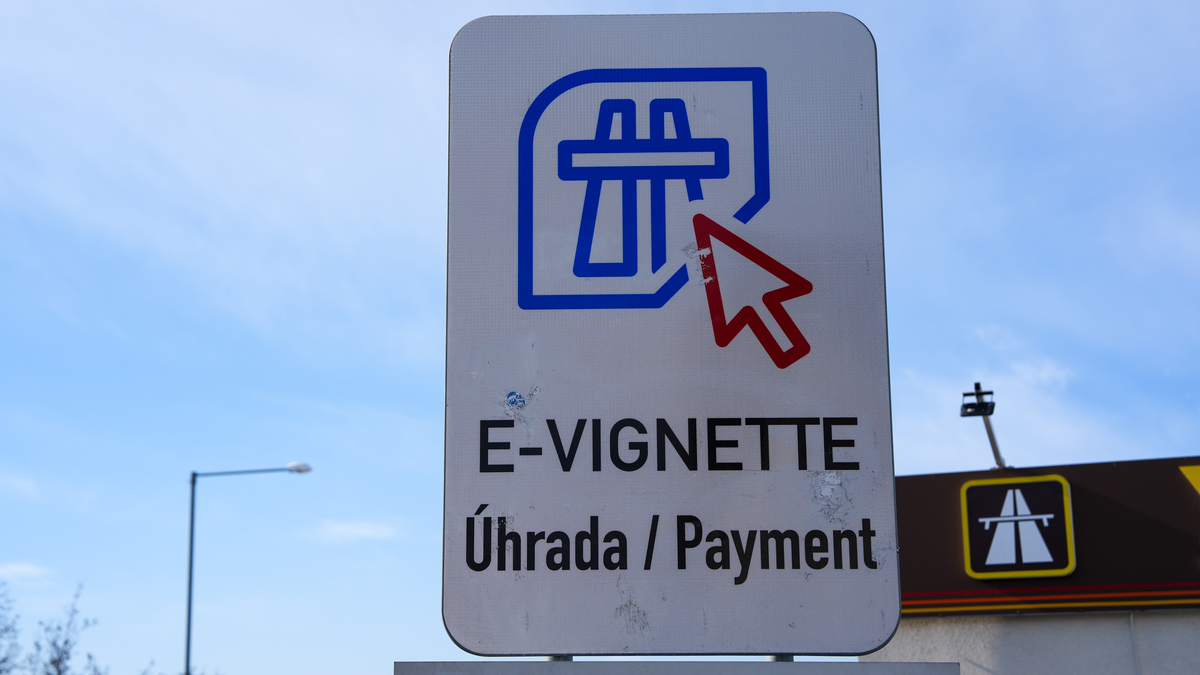
Driving the D5 toward the German border on 25 February 2026, we passed multiple ANPR gantries monitoring traffic on the motorway near Rozvadov. Vignette requirement signs were clearly visible at the roadside, and the toll road markings left no doubt that we were on a charged network.
What struck us was how easy it would be to miss entirely. There are no toll booths with barriers and no manual checks — just cameras reading every plate against a database as you pass. A driver who crosses into the Czech Republic without a valid vignette registered to their plate may not realise anything has happened until a payment notice arrives at their home address weeks later.
This guide covers what the Czech vignette fine amounts to in 2026, how the enforcement system for motorway fines works, and whether that notice can follow you home.
Key facts at a glance
- • Missing vignette on-the-spot fine: Czech vignette penalty CZK 5,000
- • Administrative proceedings: up to CZK 20,000 (~€800)
- • Intentional exemption fraud: up to CZK 100,000 (~€3,500)
- • EU cross-border enforcement: applies to DE / PL / AT drivers
- • UK drivers post-Brexit: different situation — see below
What Is the Toll Fine for Driving Without a Vignette in Czech Republic?
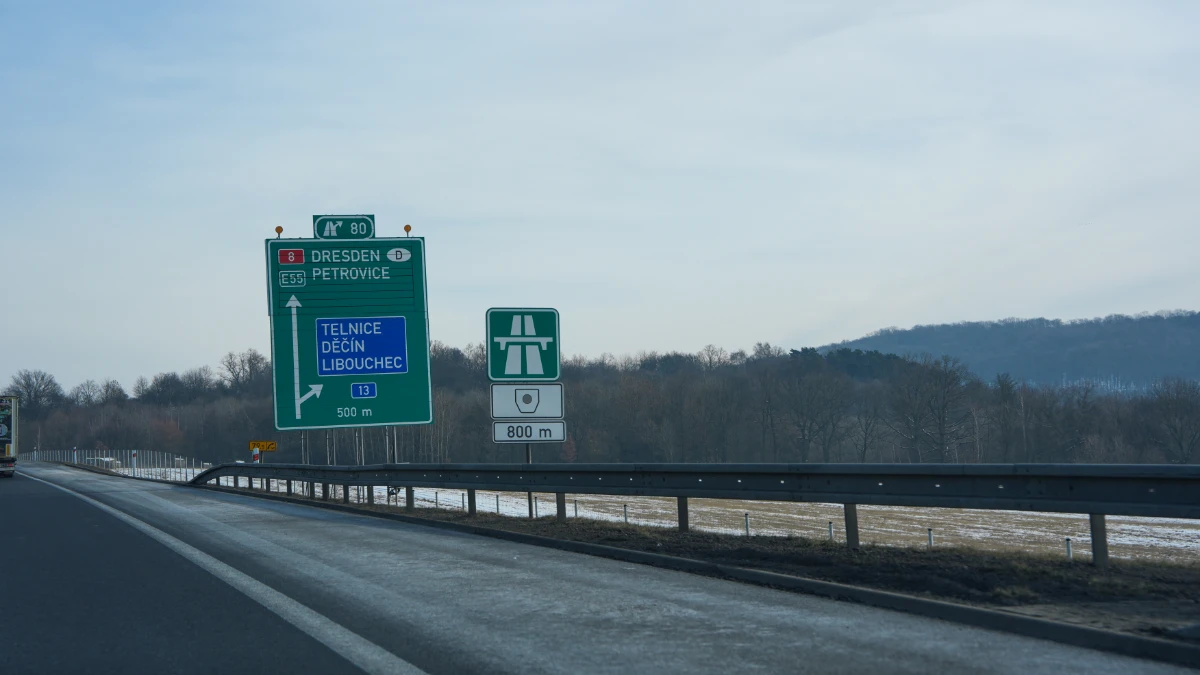
The Czech motorway toll system is operated by the State Fund for Transport Infrastructure (SFDI) and managed via edalnice.gov.cz. It is entirely digital: there is no sticker to display. Your licence plate is registered in the system, and ANPR cameras on gantries check it automatically every time you pass. The toll obligation to have a valid Czech e-vignette applies to all vehicles with at least four wheels under 3.5 tonnes on motorways and expressways; trailers and motorcycles are exempt. Vehicles over 3.5 tonnes — including larger motorhomes — are subject to a separate distance-based Czech toll fine system via MYTOCZ.eu as they do not use the vignette system at all. As someone who will travel the Czech network in a 3.5-tonne motorhome this summer, this is a distinction I check at every border: the weight on your registration certificate is what counts, not the loaded weight on the day.
If your plate is not registered when a gantry reads it, two outcomes are possible depending on how the violation is processed.
On-the-Spot Fine: CZK 5,000
If stopped by a police patrol or customs officer, the Czech vignette penalty is CZK 5,000. Payment is made directly to the officer by card (Visa or Mastercard) or cash. Always ask for a receipt. Most Czech police vehicles carry card payment terminals so cashless payment is straightforward.
Administrative Proceedings: up to CZK 20,000
If the case is not settled on the spot and escalates to administrative proceedings, the penalty can reach CZK 20,000 (approximately €800). This route is more common for camera-detected violations where the driver was not stopped in person. According to edalnice.gov.cz (2026), these are the current fine levels under the Czech Road Act. Not sure if your vignette is active? Check your licence plate at our Czech vignette validity checker.
Intentional Exemption Fraud: up to CZK 100,000
A third, more serious category applies to exemption abuse — registering a vehicle as exempt without being entitled to that status. Under the Czech Road Act (Act No. 13/1997 Coll.), the CZK 100,000 (~€3,500) penalty applies to any entity that submits an exemption notice without the legal right to do so, regardless of intent. This is a separate offence from simply driving without a vignette — a forgotten payment or a plate typo falls under the standard CZK 5,000–20,000 range.
Check the validity of your vignette for Czech Republic Buy a Vignette Online
How Are Czech Toll Fines Enforced?
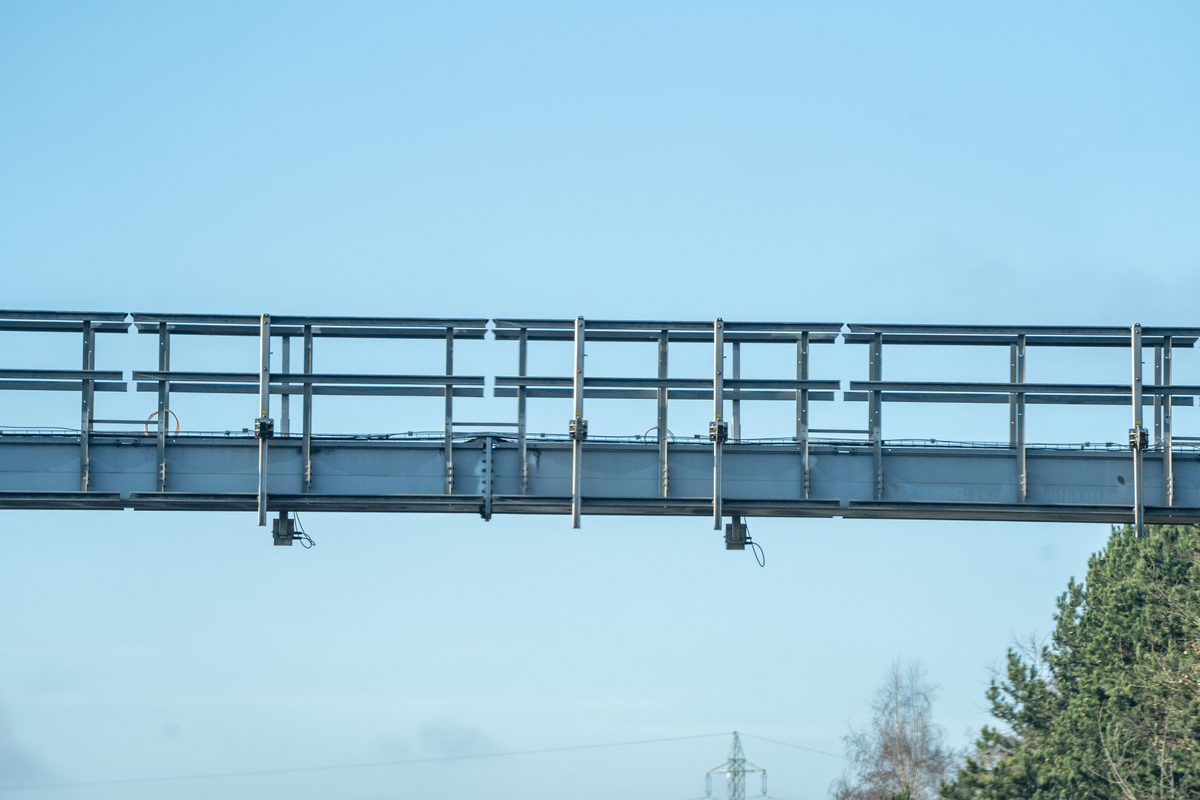
Czech vignette enforcement is more layered than most foreign drivers expect, and critically, it does not start at the border. During our 2026 field research across multiple Czech crossings — including the Czech-Polish border on the D8 and the D5 Rozvadov corridor — we confirmed that there is no physical vignette check at any entry point. Signboards indicating the vignette requirement appear once you are inside Czech territory. By the time you see the first sign, typically 10–100 metres after the crossing, you may already be on a toll road with no exit available.
On the D8 Petrovice–Breitenau corridor in February 2026, the motorway runs for six to seven kilometres without an exit before the border zone. Once committed to that approach, there is no opportunity to leave the road and purchase a vignette beforehand. Three enforcement methods operate independently once you are on the network:
Fixed ANPR Gantries
Gantry-mounted cameras cover the full D-road (dálnice) network and a growing number of R-road (rychlostní silnice) expressways — for a full list of which roads require a vignette, and which sections are exempt, see our Czech toll roads guide and toll-free routes. The system reads licence plates in real time and cross-references them against the SFDI database. There is no margin: either the plate is registered or it is not. On the D1 between Prague and Brno, we counted four active enforcement gantries on a single journey — roughly one every 40 kilometres. On the D5 approaching the German border, we observed multiple gantry structures at varying stages of activation as the network continues to expand.
Mobile Enforcement Vehicles
During our February 2026 field research on the D5, we observed several unmarked vehicles operating on the motorway that appeared to be equipped to check toll compliance electronically while in traffic. These are distinct from both fixed gantries and uniformed police checkpoints and are not widely documented. Their presence means enforcement can occur on any motorway stretch, not only at visible camera infrastructure.
If you purchase through Czechvignette.cz and receive a fine due to an error on our part, our fine guarantee covers it.
Police and Customs Checkpoints
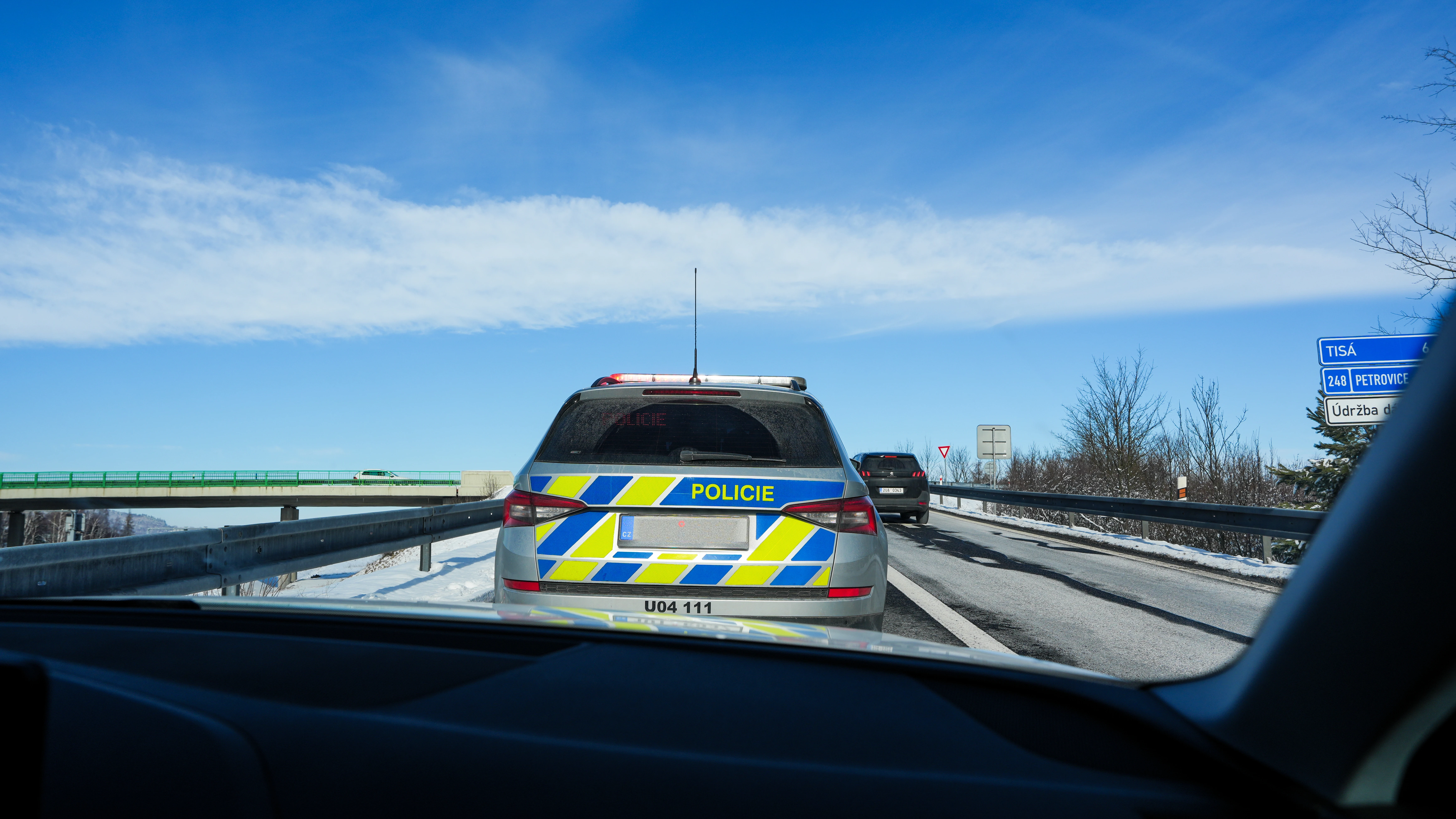
Police and customs officers can stop any vehicle at any time. Foreign-registered vehicles are regularly targeted at dedicated checkpoints. Officers carry card payment terminals. At the D8 Petrovice–Breitenau crossing in February 2026, we observed three active inspection tents conducting selective checks on both passenger cars and buses — this is standard border procedure and operates entirely separately from the ANPR vignette enforcement on the motorway downstream.
Do Czech Vignette Fines Follow You Home?
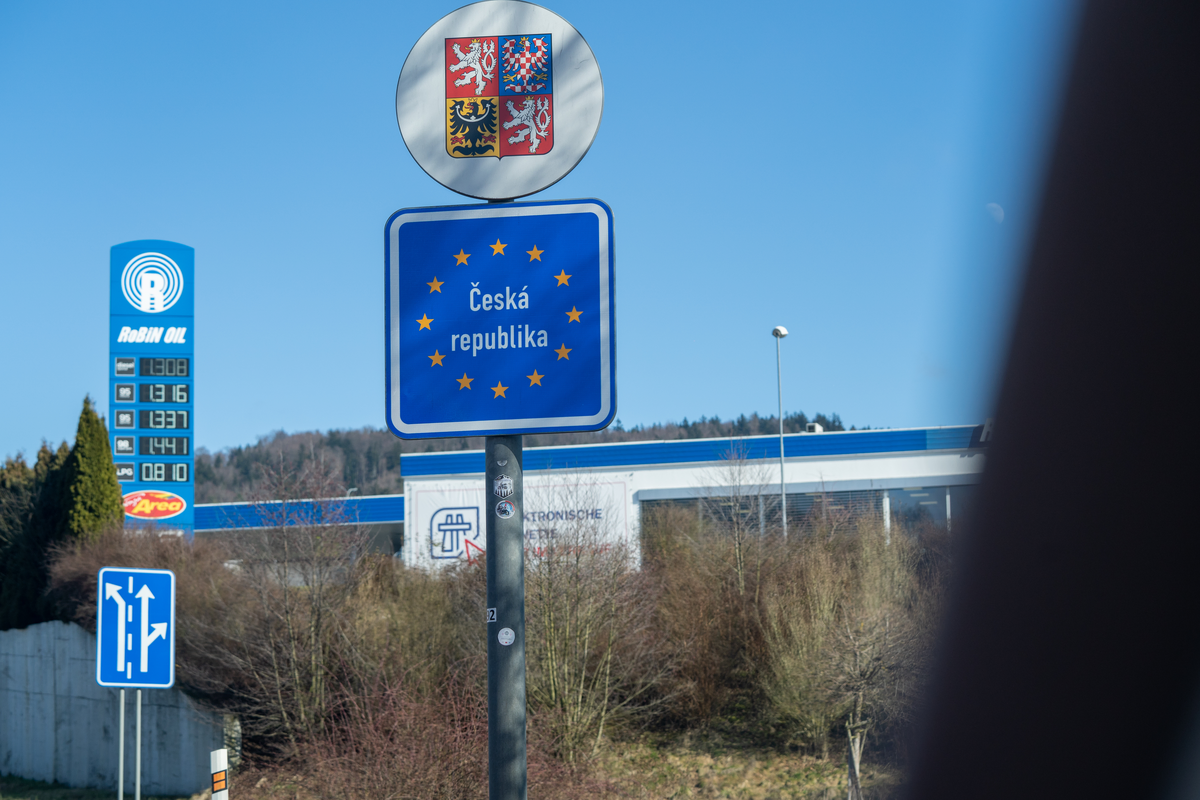
For drivers from EU member states, the answer is “yes” — and enforcement has grown significantly stronger since the 2015 update to the cross-border framework. EU Directive 2015/413 allows Czech authorities to query the vehicle registration database of any EU member state to identify the registered owner of a vehicle that committed an offence. A payment notice is then sent to that address in the owner’s own language.
The directive covers failure to pay road tolls, which explicitly includes the Czech e-vignette. German drivers receive a letter in German; Polish drivers in Polish; Austrian drivers in German. Unpaid fines are passed to collection agencies operating across EU borders. Under Czech administrative law, offences of this type are generally subject to a one-year limitation period — if no valid notice is issued within twelve months of the offence, the case is typically time-barred (Act No. 250/2016 Coll. on Liability for Offences, §29). Note that uncollected post is deemed legally delivered after a set period; ignoring a letter does not make a fine disappear.
During our February 2026 field research on the D5, we spoke to a German driver at a Czech service area who had received a payment notice at his home address in Bavaria two months after a motorway trip — for a vignette he had forgotten to renew for the new year. He had not been stopped on the road at all.
| Country | EU member? | CBE Directive applies? | Practical risk level |
|---|---|---|---|
| Germany | Yes | Yes | High |
| Austria | Yes | Yes | High |
| Yes | Yes | High | |
| United Kingdom | No (post-Brexit) | No | Lower for camera fines; full risk if stopped in person |
For UK drivers, the situation changed after Brexit. The UK is no longer covered by Directive 2015/413, meaning Czech authorities cannot automatically access UK vehicle registration data through the EU framework. Enforcement of camera-detected fines against UK-registered vehicles is significantly more limited in practice. However, UK drivers stopped in person by police remain fully liable for on-the-spot payment regardless of nationality. The situation continues to evolve; UK drivers should verify current enforcement status before travel.
Sources: EU Directive 2015/413, European Parliament legislative resolution of 24 April 2024 amending Directive 2015/413, etsc.eu
Avoid the Fine: Buy Your Czech Vignette Before You Cross the Border
We are a third party reseller — not the official Czech toll authority. You can buy the e-vignette directly through the official system at edalnice.gov.cz, or through our service at Czechvignette.cz. The vignette is registered digitally to your licence plate; there is nothing to display or carry.
Our 2026 field research confirmed what many drivers learn too late: there is no practical opportunity to buy a vignette at the border before entering a toll road. On the D8 after the Petrovice/Breitenau crossing, the first unauthorised station offered to process a vignette informally using a staff member’s personal phone, for an extra 40 CZK service charge — not an official channel. The first authorised purchase point — a Robin Oil station — required approximately 30 minutes of driving and a highway exit. The ANPR cameras do not distinguish between intent and oversight.
CzechVignette.cz is a third party vignette reseller and is not affiliated with the Czech toll authority (SFDI) or the edalnice.gov.cz official system. Fine amounts and enforcement rules are subject to change — always verify current figures against official sources before travel.
FAQ
What is the fine for no vignette in Czech Republic?
The on-the-spot fine is CZK 5,000, payable directly to police or customs officers by card or cash. Administrative proceedings can reach CZK 20,000 (~€800). A separate penalty of up to CZK 100,000 (~€3,500) applies to exemption abuse — submitting an exemption notice without being legally entitled to do so, regardless of intent.
What should I do if I've already entered a Czech motorway without a vignette?
Buy one immediately — either online at Czechvignette.cz or edalnice.gov.cz on your phone, or stop at the nearest rest stop or service area and purchase at the counter. Do not continue on the toll road without a valid vignette registered to your plate.
Can Czech vignette fines be enforced in Germany, Poland or Austria?
Yes. Under EU Directive 2015/413, Czech authorities can access vehicle registration data from other EU member states and send payment notices to the registered owner’s home address in their own language. German, Polish, and Austrian drivers face real, active enforcement risk. UK drivers post-Brexit have more limited exposure for camera-detected fines but remain fully liable if stopped in person.
How do you pay a vignette fine in Czech Republic?
On-the-spot fines are paid directly to the officer by card (Visa or Mastercard) or cash — always request a receipt. Camera-detected fines sent by post are paid by bank transfer using the details in the notice.
Do Czech police stop foreign cars for missing vignettes?
Yes. Foreign-registered vehicles can be stopped at any time by police or customs officers on Czech motorways. Officers may require on-the-spot payment of a deposit or fine, and vehicles may be held until this is resolved. There is no exemption for foreign drivers. During our February 2026 research drive on the D8 Petrovice–Breitenau corridor, we observed selective checkpoint stops of passenger cars.
Where can I buy a Czech vignette near the border?
Buying at the border is not reliable. Our field research found the first authorised purchase point after the Czech-German border — a Robin Oil station — required approximately 30 minutes of driving and a highway exit after crossing. EuroOil stations and some MOL stations are also authorised resellers. The safest option is to buy online at edalnice.gov.cz or through Czechvignette.cz at least one day before travel.
Written by: Mattijs Wijnmalen CEO and co-founder of CzechVignette.cz. Mattijs has over 10 years' experience in European road tolling. He researched and wrote this article following personal field trips in February and March 2026, driving the D1, D8/A17, and Prague–Dresden routes himself. All photography is by Ujjawal Verma, taken on the same trips.
Fact-checked by: Freek Jurg, COO and co-founder of CzechVignette.cz, with over 10 years' experience in European tolling operations.

Mattijs Wijnmalen
Lead travel authority and road expert